

Saturday, June 6, 2026

Security Boulevard Logo

Security Boulevard

The Home of the Security Bloggers Network

Community Chats Webinars Library
  • Home
    • Cybersecurity News
    • Features
    • Industry Spotlight
    • News Releases
  • Security Creators Network
    • Latest Posts
    • Syndicate Your Blog
    • Write for Security Boulevard
  • Webinars
    • Upcoming Webinars
    • Calendar View
    • On-Demand Webinars
  • Events
    • Upcoming Events
    • On-Demand Events
  • Sponsored Content
  • Chat
    • Security Boulevard Chat
    • Marketing InSecurity Podcast
    • Techstrong.tv Podcast
    • TechstrongTV - Twitch
  • Library
  • Related Sites
    • Techstrong Group
    • Cloud Native Now
    • DevOps.com
    • Security Boulevard
    • Techstrong Research
    • Techstrong TV
    • Techstrong.tv Podcast
    • Techstrong.tv - Twitch
    • Devops Chat
    • DevOps Dozen
    • DevOps TV
  • Media Kit
  • About
    • Sponsor

  • Analytics
  • AppSec
  • CISO
  • Cloud
  • DevOps
  • GRC
  • Identity
  • Incident Response
  • IoT / ICS
  • Threats / Breaches
  • More
    • Blockchain / Digital Currencies
    • Careers
    • Cyberlaw
    • Mobile
    • Social Engineering
  • Humor
Security Bloggers Network Social Engineering 

Home » Cybersecurity » Social Engineering » QR Codes and CAPTCHA Tests: New Scams in a Digital Age

SBN

QR Codes and CAPTCHA Tests: New Scams in a Digital Age

by Social-Engineer on July 20, 2022

When you think about a scam, what comes to mind? Perhaps you think about receiving a poorly drafted email saying “You Just Won $500! Click HERE NOW!”. Maybe you think about a sketchy salesperson approaching you about a timeshare in Hawaii that seems way too good to be true.

When we think about scams like these, it can be easy to say to ourselves: “I could never fall for something like that!”. Now, perhaps you would not fall for such an over-the-top or blatant scam as the ones mentioned above. However, it would be foolish for us to let our guards down and underestimate the craftiness of modern scammers. The truth is malicious attackers have become very creative in the tactics they use to dupe their victims. The traps they have set may be where you least expect them to be!

QR Codes and CAPTCHA Tests

To Scan or Not to Scan?

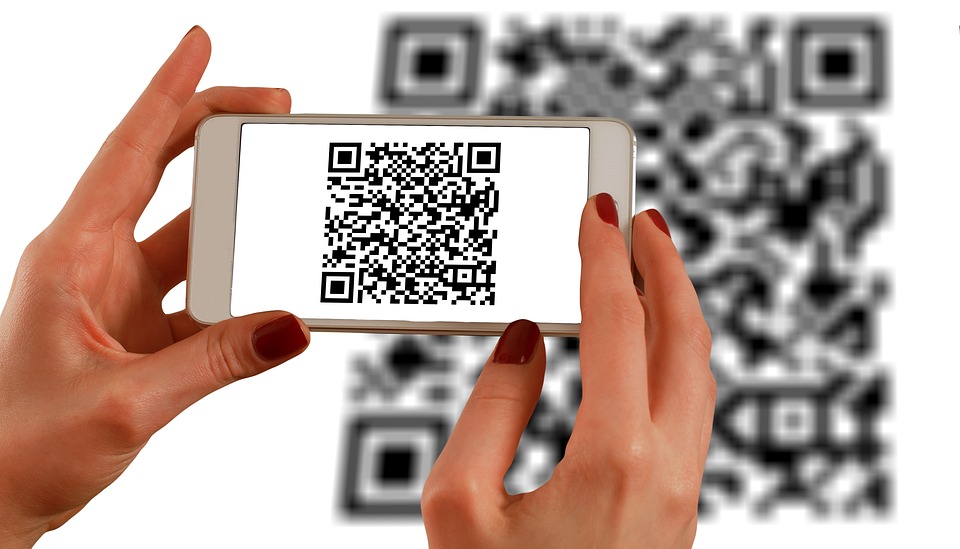
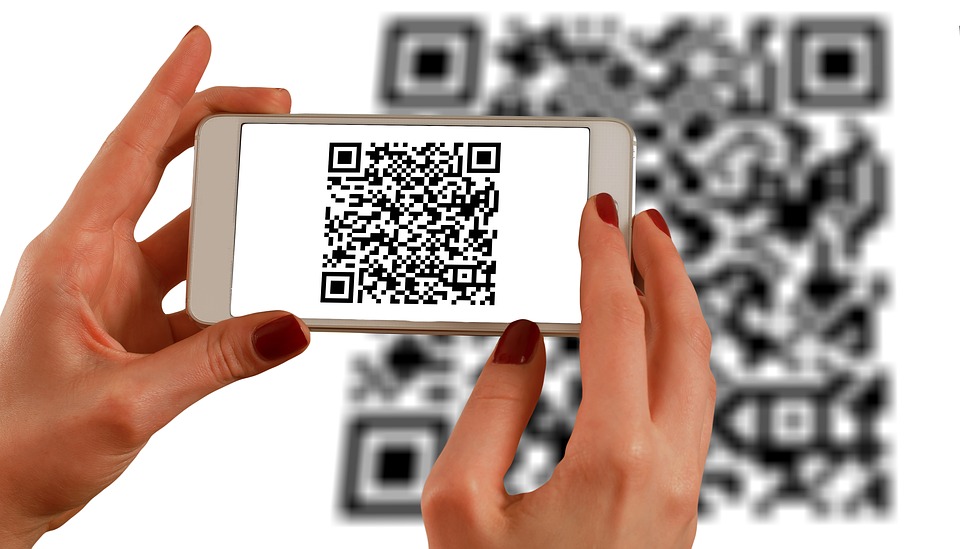
The use of QR codes has become increasingly popular nowadays. You can find them just about anywhere from viewing restaurants menus to performing monetary transactions at places of business. These especially became more common during the height of the pandemic. Scanning a QR code with a smartphone is convenient and easy, but malicious attackers have begun exploiting features like these.
QR Codes and CAPTCHA Tests
In several Texas cities, scammers would slap fake QR codes on parking meters. Scanning this code would take the victim to a phony website asking for a credit card. Police say it is unknown just how many people could have been duped and had their card information compromised, as these fake QR codes were found all over the city’s meters. Aside from public spaces, scammers have also begun including the use of QR codes in phishing emails.

Of course, being directed to a fake website is not the only danger when it comes to scanning malicious QR codes. They can also connect a victim’s device to a malicious network and share the user’s location. Malware embedded in the QR code can automatically initiate phone calls, draft emails, and send text messages. Automatic fraudulent payments may also be initiated.

Are You a Human?

CAPTCHA, otherwise known as “Completely Automated Public Turing test to tell Computers and Humans Apart”. A mouthful for sure, but it is likely you have run into these tests many times while browsing the web. Perhaps it stated you need to pick out all the images of fire hydrants or type out the terribly scribbled characters shown in an image. Despite their rather odd method of human verification, CAPTCHA tests have become very commonplace in the digital age today. Even though they may be frustrating at times, at least they are always a sign of credibility, right? Well, not quite.

QR Codes and CAPTCHA Tests
Scammers know that CAPTCHA tests can provide a sense of legitimacy. And the truth is, anyone can create one of these pages. This makes them a very deceptive tool in the hands of a scammer. For example, in 2020 a phishing attack made on Netflix users included the use of one of these pages. Users were sent an email titled “Notice of Verification Failure”, detailing an “issue” with the customer’s billing information. To add to the email’s credibility, a link was provided that took customers to a CAPTCHA page with Netflix branding. Once a victim correctly completed the test, they were led to a Netflix lookalike log-in page which would steal credentials.

As we can see, the sole purpose of the CAPTCHA page was to provide a false sense of legitimacy. The CAPTCHA page itself was not the scam, and it may seem like a very small or unimportant thing to include. However, it reinforced the email’s credibility and led to many customers having their login credentials stolen!

How to Protect Yourself

Now that we have discussed some methods that malicious attackers use, how do we ready ourselves for when we come across scams like these? Let us consider some tips for each.

Fake QR Codes

    • Always be wary of what you scan. Especially if the code is found in a public space like a parking meter. Just because it may look legitimate, does not mean it is.
    • Most modern smartphones allow the user to Preview a QR code’s URL. If the URL looks off or suspicious, you should not trust it! There are also secure scanner apps that have been designed to spot malicious links before they are pulled up on your phone. Mobile security software can also do a great job of detecting bad links and sites.
    • Never trust a QR Code in an email! Even if it seems to be from a legitimate source.
    • To avoid being led to a phony website, try searching for the company’s official website on your own rather than scanning a QR code.

    Fake CAPTCHA Tests:

    • Do not let the presence of a CAPTCHA test lure you into a false sense of legitimacy. Just because a site you are directed to may have them, does not mean they are trustworthy.
    • Always be suspicious of any email or text message asking you to verify personal information or even credit card details. When a link is included along with the request, this is also something to be wary of. If something does not seem right, contact the company through their official channels.
    • Check for spelling errors in URL links and email addresses. Phishing scams may have typos or grammatical errors. Keeping an eye out for these can help us spot a malicious email or text.
    • If an email asks you to log in to an account or online service, log in to your account through a known and trusted link or bookmark, rather than clicking any link in the email. This can help you to spot a fake look-alike webpage, and make sure you are logging in to the correct one.

    Safely Moving Forward

    Being aware of potential dangers in the world around us is important. Especially when malicious attackers seek to compromise us digitally now more than ever. We must take steps to protect ourselves from the likes of scammers.

    Often, this simply involves us using our better judgement when navigating the online world. Now when we are presented with a QR code or CAPTCHA test, we will not immediately assume that these are harmless!

    You may be familiar with the phrase “Knowledge is Power”. In this case, Knowledge is also Protection for us. Becoming knowledgeable about the ways scammers may try to take advantage of us, will help us to combat any efforts they make to do so.

    Sources:
    https://www.austintexas.gov/news/fraudulent-qr-codes-found-austin-parking-pay-stations
    https://www.social-engineer.org/framework/attack-vectors/phishing-attacks-2/
    https://cisomag.eccouncil.org/think-before-you-scan-malicious-qr-codes-in-the-wild/#:~:text=The%20malicious%20QR%20codes%20can,can%20reveal%20the%20user%27s%20location.
    https://www.forbes.com/sites/kateoflahertyuk/2020/07/29/new-netflix-threat-this-legit-looking-scam-could-steal-your-credit-card-details/?sh=6665c4e369d2
    https://qrd.by/help/article/how-can-i-see-the-url-behind-the-qr-code

    Images:
    https://unsplash.com/photos/SpVHcbuKi6E
    https://cdn.pixabay.com/photo/2016/01/29/09/56/hands-1167612_960_720.jpg
    https://aws1.discourse

*** This is a Security Bloggers Network syndicated blog from Security Through Education authored by Social-Engineer. Read the original post at: https://www.social-engineer.org/social-engineering/qr-codes-and-captcha-tests-new-scams-in-a-digital-age/

July 20, 2022July 20, 2022 Social-Engineer captcha tests, General Social Engineer Blog, Malicious Attackers, malicious social engineering, QR Codes, scammers, social engineering
  • ← The Real Measure of Security Effectiveness: Operationalizing the Tech
  • HavanaCrypt Ransomware Poses as Google Update →

Techstrong TV

Click full-screen to enable volume control
Watch latest episodes and shows

Tech Field Day Events

Upcoming Webinars

Toxic Flows: When Your Agent Skill Becomes a Supply Chain Attack
The Cost of Exposure: Managing the Operational Risks of Executive Security Incidents
The Future of Agentic Software Delivery: Unifying Source & Binaries
35 Million Lines, Zero Build-Breakers: How Adyen Scaled DevSecOps
Zero Trust for Agentic AI: Managing Non‑Human Identities at Scale

Podcast

Listen to all of our podcasts

Secure by Design

3 days ago | Jack Poller

Senator Sanders Wants to Own AI Companies — and Hand America’s Adversaries the Keys

2 weeks ago | Jack Poller

NIST’s Nine: The PQC Signature Race Moves to Round Three

2 weeks ago | Jack Poller

The Quantum Arms Race: Why Washington Just Wrote a $2 Billion Check to Nine Companies

3 weeks ago | Jack Poller

Beyond Moore’s Law: The Hyper-Acceleration of Autonomous AI Cyber Capabilities

4 weeks ago | Jack Poller

The Exception Economy: When Security Teams Stop Protecting and Start Negotiating

Press Releases

GoPlus's Latest Report Highlights How Blockchain Communities Are Leveraging Critical API Security Data To Mitigate Web3 Threats

GoPlus’s Latest Report Highlights How Blockchain Communities Are Leveraging Critical API Security Data To Mitigate Web3 Threats

C2A Security’s EVSec Risk Management and Automation Platform Gains Traction in Automotive Industry as Companies Seek to Efficiently Meet Regulatory Requirements

C2A Security’s EVSec Risk Management and Automation Platform Gains Traction in Automotive Industry as Companies Seek to Efficiently Meet Regulatory Requirements

Zama Raises $73M in Series A Lead by Multicoin Capital and Protocol Labs to Commercialize Fully Homomorphic Encryption

Zama Raises $73M in Series A Lead by Multicoin Capital and Protocol Labs to Commercialize Fully Homomorphic Encryption

RSM US Deploys Stellar Cyber Open XDR Platform to Secure Clients

RSM US Deploys Stellar Cyber Open XDR Platform to Secure Clients

ThreatHunter.ai Halts Hundreds of Attacks in the past 48 hours: Combating Ransomware and Nation-State Cyber Threats Head-On

ThreatHunter.ai Halts Hundreds of Attacks in the past 48 hours: Combating Ransomware and Nation-State Cyber Threats Head-On

Subscribe to our Newsletters

Most Read on the Boulevard

Anxious Security Pros Watch as Anthropic, OpenAI Expand Access to Frontier AI Models
AI-Powered Computer Worm Reveals New Cybersecurity Threat
Sumo Logic Brings SIEM Platform to AWS European Sovereign Cloud
MazeBolt Adds AI Module to Simulate DDoS Attack
Is It Time For A U.S. Cyber Force?
Imperva Customers Protected Against CVE-2026-49975 (HTTP/2 Bomb) DoS
OpenAI Codex Supply Chain Attack Exposes Growing Risks in AI Development Environments
Cybersecurity Trends 2026
Auth0 vs Okta vs Stytch vs WorkOS vs SSOJet (2026): A Buyer-Stage Framework
New Shai-Hulud Miasma Wave Hits Hundreds of npm Packages

Industry Spotlight

Anthropic Mythos AI Model Strikes Fear in Trump Administration, U.S. Banks
Cloud Security Cybersecurity Data Privacy Data Security Featured Incident Response Industry Spotlight Malware Mobile Security Network Security News Security Awareness Security Boulevard (Original) Social - Facebook Social - LinkedIn Social - X Spotlight Threats & Breaches Vulnerabilities 

Anthropic Mythos AI Model Strikes Fear in Trump Administration, U.S. Banks

April 12, 2026 Jeffrey Burt | Apr 12 Comments Off on Anthropic Mythos AI Model Strikes Fear in Trump Administration, U.S. Banks
The Day the Security Music Died
AI and Machine Learning in Security Cybersecurity Featured Industry Spotlight Security Boulevard (Original) Social - Facebook Social - LinkedIn Social - X Spotlight 

The Day the Security Music Died

April 8, 2026 Alan Shimel | Apr 08 Comments Off on The Day the Security Music Died
The Lock, Not the Alarm: How Palo Alto’s Koi Acquisition Rewrites Endpoint Security
Featured Industry Spotlight Security Boulevard (Original) Social - Facebook Social - LinkedIn Social - X Spotlight Uncategorized 

The Lock, Not the Alarm: How Palo Alto’s Koi Acquisition Rewrites Endpoint Security

February 18, 2026 Jack Poller | Feb 18 Comments Off on The Lock, Not the Alarm: How Palo Alto’s Koi Acquisition Rewrites Endpoint Security

Top Stories

Meta, Microsoft, DOJ, and Others Disrupt Southeast Asia Scam Compounds
Cloud Security Cyberlaw Cybersecurity Data Privacy Data Security Featured Incident Response Mobile Security Network Security News Security Boulevard (Original) Social - Facebook Social - LinkedIn Social - X Spotlight Threat Intelligence Threats & Breaches 

Meta, Microsoft, DOJ, and Others Disrupt Southeast Asia Scam Compounds

June 4, 2026 Jeffrey Burt | 2 days ago 0
Anxious Security Pros Watch as Anthropic, OpenAI Expand Access to Frontier AI Models
Cloud Security Cyberlaw Cybersecurity Data Privacy Data Security Endpoint Featured Governance, Risk & Compliance Mobile Security Network Security News Security Awareness Security Boulevard (Original) Social - Facebook Social - LinkedIn Social - X Spotlight Threat Intelligence 

Anxious Security Pros Watch as Anthropic, OpenAI Expand Access to Frontier AI Models

June 3, 2026 Jeffrey Burt | 3 days ago 0
Sumo Logic Brings SIEM Platform to AWS European Sovereign Cloud
Cloud Security Cybersecurity Featured News Security Boulevard (Original) Social - Facebook Social - LinkedIn Social - X Spotlight 

Sumo Logic Brings SIEM Platform to AWS European Sovereign Cloud

June 2, 2026 Michael Vizard | 4 days ago 0

Security Humor

Randall Munroe’s XKCD 'Types of Board Game'

Randall Munroe’s XKCD ‘Types of Board Game’

Download Free eBook

[su_panel border="0px solid #ddd" radius="0" text_align="center" padding-top="0px" padding-bottom="0px"]
Managing the AppSec Toolstack
[/su_panel]

Security Boulevard Logo White

DMCA

Join the Community

  • Add your blog to Security Creators Network
  • Write for Security Boulevard
  • Bloggers Meetup and Awards
  • Ask a Question
  • Email: [email protected]

Useful Links

  • About
  • Media Kit
  • Sponsor Info
  • Copyright
  • TOS
  • DMCA Compliance Statement
  • Privacy Policy

Related Sites

  • Techstrong Group
  • Cloud Native Now
  • DevOps.com
  • Digital CxO
  • Techstrong Research
  • Techstrong TV
  • Techstrong.tv Podcast
  • DevOps Chat
  • DevOps Dozen
  • DevOps TV
Powered by Techstrong Group
Copyright © 2026 Techstrong Group Inc. All rights reserved.
×

Insert/edit link

Enter the destination URL

Or link to existing content

    No search term specified. Showing recent items. Search or use up and down arrow keys to select an item.