
Home » Security Bloggers Network » How to build a unified control framework for multi-standard compliance

How to build a unified control framework for multi-standard compliance

Businesses face an increasingly complex environment when it comes to compliance. With multiple standards emerging from different jurisdictions and regulatory bodies, achieving operational efficiency while ensuring regulatory adherence can be challenging. A Unified Control Framework (UCF) designed to handle multi-standard compliance is not just a technical solution; it is a leadership imperative that demands vision, collaboration, and robust strategies.
Understanding a unified control framework in the context of compliance
A Unified Control Framework is essentially an organized, transparent, and comprehensive guideline that integrates various compliance controls from different regulatory standards into one cohesive system. In this framework, disparate compliance mandates are harmonized to allow organizations to simultaneously address all relevant regulatory, legal, and internal requirements. The UCF serves several key objectives:
- Simplification of Complexity: It reduces redundancy and complexity by consolidating overlapping controls and requirements, thereby streamlining the overall management of multiple frameworks.
- Operational Efficiency: Through standardization, companies can reduce implementation and maintenance costs while ensuring continuous compliance across various standards.
- Risk Mitigation: A unified approach enhances risk management by providing a consolidated view of compliance risks and the corresponding controls to mitigate them.
- Visibility and Accountability: Integrating governance mechanisms across standards creates a culture of accountability and supports ongoing monitoring and reporting for regulatory needs.
The framework typically spans a wide array of standards, including industry-specific regulations (such as HIPAA for healthcare, PCI-DSS for payment card security, or GDPR for personal data protection), as well as general control frameworks like ISO 27001 or NIST guidelines. Effective implementation relies on understanding the core principles of each regulatory body while recognizing intersections and commonalities that can be leveraged across the board.
Read the “A step-by-step guide to controls remediation planning” article to learn more!
The multifaceted landscape of compliance standards
Before embarking on the journey to build a unified control framework, it’s crucial to understand the diversity of compliance standards organizations need to address. The following points offer a closer look at the different types of standards that are often involved:
Industry-specific standards and regulations
Organizations in specialized fields such as finance, healthcare, energy, and technology are subject to standards that directly affect their operations. For instance, financial institutions must adhere to frameworks like the Sarbanes-Oxley Act (SOX) and Payment Card Industry Data Security Standard (PCI-DSS), while healthcare companies must meet HIPAA requirements. Each of these sets unique expectations concerning data handling, privacy, audit controls, and reporting requirements.
General security and risk management frameworks
Standards such as ISO 27001, NIST Cybersecurity Framework, and COBIT offer more holistic approaches to managing information security and risk. These frameworks are not merely prescriptive; they focus on establishing an ongoing process of risk assessment, mitigation, and continuous improvement. The goal is to integrate best practices that support systemic resilience, regardless of the specific industry.
Global regulations and local laws
In an increasingly globalized business environment, companies face both international regulations and local legislation. The complexity arises from disparate legal requirements around data privacy, financial reporting, and cybersecurity norms across various jurisdictions. The unified control framework must be agile enough to adjust to local nuances while aligning with global standards.
Read the “What are common controls and why do you need one?” article to learn more!

Looking for automated, always-on IT control assurance?
TrustCloud keeps your compliance audit-ready so you never miss a beat.
Leadership strategies for building a unified control framework
Establishing a unified control framework in a multi-standard environment is a transformation that calls for visionary leadership. It is not simply a technical or process change; it requires cultivating a culture that understands the strategic importance of robust risk management and compliance alignment.
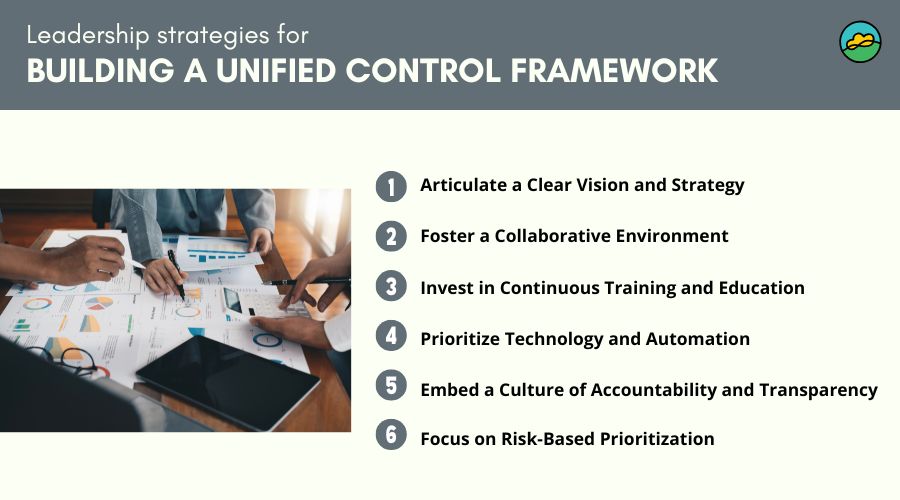
Leaders are called upon to manage change, advocate for transparency, empower teams, and steer organizational alignment toward a unified mission. Here are several actionable leadership strategies:
- Articulate a Clear Vision and Strategy
Developing a coherent vision is the cornerstone of successful leadership in this domain. Leaders must:- Set the Mission: Clearly outline the objectives behind consolidating compliance controls and stress the value it adds in managing risk while driving business efficiency. This vision should align with overall enterprise goals and drive consistency in policy enforcement.
- Communicate Transparently: Share the benefits of a unified approach with all stakeholders, from the board of directors to operational teams. Transparency builds trust and facilitates buy-in across departments.
- Create a Roadmap: Develop a strategic roadmap that details phased milestones, key performance indicators (KPIs), and expected outcomes. This helps manage expectations and provides clarity on progress and next steps.
- Foster a Collaborative Environment
Leading a multi-standard transformation requires breaking down silos. Leaders should:- Build Cross-Functional Teams: Create committees or task forces that include representatives from legal, IT, internal audit, risk management, and operations. This diverse approach ensures all perspectives are considered throughout the process.
- Leverage Expertise: Engage with experts both internally and externally to ensure that the design and implementation of the framework are comprehensive and in line with best practices.
- Promote Open Communication: Encourage teams to share experiences, challenges, and potential improvements. A culture of continuous improvement and learning supports a proactive approach to compliance management.
- Invest in Continuous Training and Education
A unified control framework can only be as effective as the people managing it. Leaders must:- Develop Training Programs: Implement training initiatives that educate employees about the nuances of multiple compliance standards, the rationale behind a unified control framework, and their specific roles in maintaining compliance.
- Encourage Certification: Support personal development through certification courses and workshops in risk management, cybersecurity, and compliance. This empowers teams with both technical expertise and strategic insight.
- Keep Abreast of Changes: Regulatory environments are subject to constant change. Regularly update training modules and communication channels to reflect new or amended regulations ensuring ongoing awareness and preparedness.
- Prioritize Technology and Automation
Technology forms the backbone of any integrated compliance strategy. Leaders should:- Adopt Integrated Solutions: Invest in compliance management systems that support automated control monitoring, real-time analytics, and reporting. These technological solutions help in streamlining processes and reducing the likelihood of human error.
- Promote Data-Driven Decisions: Use data to identify trends and predict areas of non-compliance. Analyzing metrics derived from unified controls can help drive decision-making and spur enhancements to compliance programs.
- Ensure Scalability and Flexibility: Choose solutions that can scale as the organization grows and adapt to integrate new regulatory standards. This strategic foresight prevents future technical debt and supports long-term strategic planning.
- Embed a Culture of Accountability and Transparency
True change is driven not only by strategy but also by cultural transformation. Leaders are at the heart of this transformation, and they must:- Create Clear Roles and Responsibilities: Instill accountability by clearly defining roles for compliance officers, risk managers, and internal auditors. Establish a matrix that outlines who is responsible for each compliance domain, ensuring no areas fall through the cracks.
- Embrace Transparency: Regularly share progress, insights, and challenges related to compliance initiatives with stakeholders. Transparent reporting, both internally and externally, reinforces a commitment to ethical practices.
- Anchor Processes in Governance: Embed the unified control framework within the fabric of corporate governance. Formalize the processes through policies, procedures, and structured review cycles.
- Focus on Risk-Based Prioritization
Given the disparate requirements of multiple standards, it’s essential to focus on risks first. Leaders should:- Conduct Comprehensive Risk Assessments: Begin by assessing the organization’s risk profile against each relevant regulatory standard. Understand overlapping risk areas and potential vulnerabilities.
- Prioritize Controls Based on Risk Impact: Allocate resources to high-risk control areas. This enables efficient allocation of budget, time, and manpower to areas where the organization is most vulnerable.
- Implement Risk Mitigation Strategies: Establish actionable plans to mitigate identified risks and integrate these measures into the unified framework.
The TrustCloud Common Controls Framework (TCCCF) provides a unified approach to managing security and privacy controls across various compliance standards. By consolidating overlapping controls into a single structure, TCCCF simplifies compliance efforts, enhances efficiency, and ensures alignment with industry best practices.
Practical steps and best practices to implement a unified control framework
Translating leadership strategies into tangible actions requires a structured approach. Below are practical steps and best practices that professionals can adopt to effectively implement a unified control framework:
Step 1. Conduct a comprehensive compliance inventory
The first step in creating a unified framework is to understand the current state of compliance in your organization. Consider the following actions:
- Map Existing Controls: Catalog the controls, policies, and procedures already in place that address the compliance standards relevant to your operations.
- Identify Overlaps and Gaps: Evaluate where the controls overlap across different standards and where gaps exist. The goal is to create efficiencies while ensuring comprehensive coverage.
- Engage Stakeholders: Work closely with departments such as IT, legal, and finance to gather comprehensive input and insights on current practices.
Step 2. Develop a unified control architecture
Using the insights gathered during the compliance inventory, develop a unified control architecture that integrates common elements across standards:
- Establish a Baseline Framework: Start with broadly accepted frameworks (e.g., ISO 27001 or NIST) and augment topics with industry-specific components.
- Use a Modular Approach: Design the framework in modules that can flexibly accommodate changes. This ensures that as new compliance requirements emerge, they can be integrated seamlessly into the existing framework.
- Define Control Categories: Group controls into categories such as data protection, access management, incident response, and risk management to maintain clarity and ease of management.
Step 3. Implement technology solutions
Leverage technology to ensure that the unified control framework is not only documented but is also actively managed:
- Compliance Management Software: Utilize platforms that offer dashboards, automated workflows, and compliance reporting functionalities. These tools help in continuous monitoring of the control environment.
- Integrate with Existing Systems: Ensure that the new control framework is compatible with other enterprise systems such as ERP, CRM, and security information event management (SIEM) solutions. Integration enables real-time data sharing and analysis.
- Automate Routine Processes: Automation reduces manual intervention and minimizes human error. Implement processes such as automatic risk scoring, control status dashboards, and triggers for compliance alerts.
Step 4. Establish clear roles, responsibilities, and governance structures
An effective unified control framework requires clearly defined governance structures to ensure its success:
- Define Accountability Structures: Set up a governance committee responsible for overseeing compliance initiatives. This committee can include representatives from senior management, IT, legal, and risk management.
- Implement Regular Audits and Reviews: Schedule periodic internal audits and reviews to ensure the controls remain effective over time and adapt to emerging risks or changes in regulatory requirements.
- Create Escalation Protocols: Define clear escalation pathways in case gaps or issues are detected. This ensures prompt remedial actions and prevents minor issues from escalating into significant risks.
Step 5. Foster a continuous improvement culture
Compliance is not a one-off project but a continuous journey. Ensure that your unified control framework remains agile and effective:
- Encourage Periodic Training and Knowledge Sharing: Establish recurring training sessions and workshops for employees to update them on new standards, revised policies, and emerging threats.
- Solicit Feedback: Foster an environment where staff at all levels are encouraged to provide feedback on the framework’s implementation. Their frontline experiences can inspire targeted improvements and innovations.
- Monitor Regulatory Changes: Stay abreast of changes in the regulatory landscape. Proactively adjust your control framework to reflect these updates, and ensure that documentation and training materials are revised accordingly.
Step 6. Leverage metrics and reporting to drive success
Quantifiable metrics and regular reporting are vital to sustaining momentum and demonstrating the effectiveness of your unified control framework.
- Define Key Performance Indicators (KPIs): Establish clear metrics to monitor adherence, such as control effectiveness scores, incident response times, audit findings, and resolution rates.
- Implement Real-Time Dashboards: Use dashboards that provide a snapshot of compliance metrics across various domains. These dashboards enable leadership to quickly identify potential issues and make data-driven decisions.
- Conduct Regular Reporting and Analysis: Schedule quarterly or monthly reviews using the gathered metrics to assess progress against targets. Use these reports to justify investments, implement course corrections, and celebrate success milestones.
Overcoming common challenges and roadblocks
Building a unified control framework is a challenging undertaking, and leaders must be prepared to confront and mitigate a variety of obstacles:
Cultural Resistance to Change
Employees and departments accustomed to legacy systems may resist new processes. Leaders can overcome this challenge by:
- Communicating Clear Benefits: Demonstrate how the unified framework will make day-to-day operations easier, reduce repetitive efforts, and enhance overall security.
- Engaging Influencers: Identify early adopters and influencers within the organization who can champion the initiative and encourage others.
- Implementing Incremental Changes: Break the project into manageable phases that allow for gradual adaptation and iterative learning, reducing the shock of radical change.
Complexity in integrating disparate standards
The diverse requirements of multiple standards can lead to seemingly contradictory controls. To navigate this complexity:
- Adopt a Risk-Based Approach: Prioritize controls based on the risk they mitigate and the impact on the organization. Focus resources on high-risk areas first.
- Standardize Common Elements: Identify common control elements that appear across various standards and streamline them to reduce duplication and complexity.
- Maintain Flexibility: Design the framework so that exceptions or specialized controls can be added where necessary without dismantling the overall structure.
Keeping pace with evolving regulations
Regulatory landscapes are fluid, and continuous adaptation is required to remain compliant.
- Establish a Regulatory Watch Team: Dedicate resources to monitoring regulatory changes and analyzing their potential impact on the unified framework.
- Integrate Regulatory Change Management: Develop processes that enable swift updates to controls and policies. This proactive stance minimizes lag time and keeps the organization ahead of emerging risks.
- Leverage External Advisors: Collaborate with legal and compliance experts who are well-versed in evolving regulatory requirements to ensure your framework remains current.
Read the “Strengthen internal controls with smart segregation of duties” article to learn more!
Summing it up
Developing a unified control framework for multi-standard compliance is a strategic imperative for today’s organizations. Through visionary leadership, collaboration, and a measured, risk-based approach, organizations can transform regulatory challenges into opportunities for operational excellence and strategic innovation. By integrating diverse control mandates into a cohesive system, leaders not only drive compliance and risk management but also foster a culture of accountability and continuous improvement.
This journey, while challenging, offers significant rewards. From enhanced operational efficiency and reduced duplication of efforts to robust risk management and greater responsiveness to regulatory changes, the benefits of a unified control framework are clear. As regulatory landscapes continue to evolve, adopting a unified, strategic approach provides the agility and resilience necessary for long-term success in today’s global marketplace.
Leaders tasked with this transition must focus on clear communication, collaborative efforts, continuous education, and agile technology adoption. By embracing these actionable strategies, professionals responsible for compliance and control frameworks can build a robust, unified control system that not only meets today’s demands but is also well-prepared for tomorrow’s challenges.
FAQs
What exactly is a Unified Control Framework (UCF) and why use it?
A Unified Control Framework (UCF) is a structured approach that consolidates multiple regulatory, security, and privacy standards such as ISO 27001, NIST CSF, GDPR, SOC 2, and HIPAA into a single, harmonized set of controls. Rather than treating each standard in isolation, UCF maps overlapping requirements into shared controls, enabling a “build once, comply many” model.
It reduces redundancy, simplifies audit preparation, and creates operational clarity. The framework supports modular use so organizations can tailor controls based on geography, industry, or line of business and provides traceability by linking each unified control back to its original standard. This makes compliance scalable, consistent, and more efficient overall.
What are the main benefits of implementing a unified control set for compliance?
Implementing a unified control set offers tangible benefits: first, it cuts down duplicate effort by eliminating overlapping controls across frameworks, saving time and resources and lowering compliance costs. Organizations can collect evidence once and reuse it across multiple audits (“collect once, use many”), enhancing efficiency.
It also provides better risk visibility; by grouping controls by objective, teams can spot gaps or blind spots more easily. Consolidation improves security posture via standardized, consistent controls. Finally, the framework enables scalability: adding new regulations requires only incremental new controls rather than reinventing the compliance program from scratch, supporting faster expansion and audit readiness.
How do organizations build and operationalize a unified control framework?
To build a unified control framework, begin by inventorying all applicable compliance obligations standards, laws, certifications, and contracts and documenting the detailed requirements for each. Next, perform control mapping: break each standard into individual requirements, then identify and align semantically similar controls across them.
Use that as the foundation for a master set of harmonized controls, written in standardized language, noting stricter or unique requirements where necessary. After defining that control set, implement centralized evidence collection processes templates, tagging, and storage systems that allow evidence to serve multiple frameworks.
Finally, integrate continuous monitoring and maintenance: schedule regular control reviews, gap analyses, and updates as regulations evolve. This ensures the unified framework remains audit-ready, scalable, and aligned with real‑world risk and business objectives.
The post How to build a unified control framework for multi-standard compliance first appeared on TrustCloud.
*** This is a Security Bloggers Network syndicated blog from TrustCloud authored by Shweta Dhole. Read the original post at: https://www.trustcloud.ai/grc/how-to-build-a-unified-control-framework-for-multi-standard-compliance/
