

Wednesday, June 17, 2026

Security Boulevard Logo

Security Boulevard

The Home of the Security Bloggers Network

Community Chats Webinars Library
  • Home
    • Cybersecurity News
    • Features
    • Industry Spotlight
    • News Releases
  • Security Creators Network
    • Latest Posts
    • Syndicate Your Blog
    • Write for Security Boulevard
  • Webinars
    • Upcoming Webinars
    • Calendar View
    • On-Demand Webinars
  • Events
    • Upcoming Events
    • On-Demand Events
  • Sponsored Content
  • Chat
    • Security Boulevard Chat
    • Marketing InSecurity Podcast
    • Techstrong.tv Podcast
    • TechstrongTV - Twitch
  • Library
  • Related Sites
    • Techstrong Group
    • Cloud Native Now
    • DevOps.com
    • Security Boulevard
    • Techstrong Research
    • Techstrong TV
    • Techstrong.tv Podcast
    • Techstrong.tv - Twitch
    • Devops Chat
    • DevOps Dozen
    • DevOps TV
  • Media Kit
  • About
    • Sponsor

  • Analytics
  • AppSec
  • CISO
  • Cloud
  • DevOps
  • GRC
  • Identity
  • Incident Response
  • IoT / ICS
  • Threats / Breaches
  • More
    • Blockchain / Digital Currencies
    • Careers
    • Cyberlaw
    • Mobile
    • Social Engineering
  • Humor
Security Bloggers Network Social Engineering 

Home » Cybersecurity » Social Engineering » Lessons from a Scam Artist

SBN

Lessons from a Scam Artist

by Social-Engineer on March 22, 2023

What does a government scam, an IT support scam and a romance scam have in common? They all use psychology and social engineering skills to convince their victims to take an action that is detrimental to them. It’s easy to think “I know better” or “that will never happen to me.” The truth is, being human is enough for anyone to fall victim to a scammer’s tactics. One way to mitigate the effect of such tactics is by being aware of the techniques that scammers use. Let’s see what lessons we can learn from scam artists to better protect ourselves.
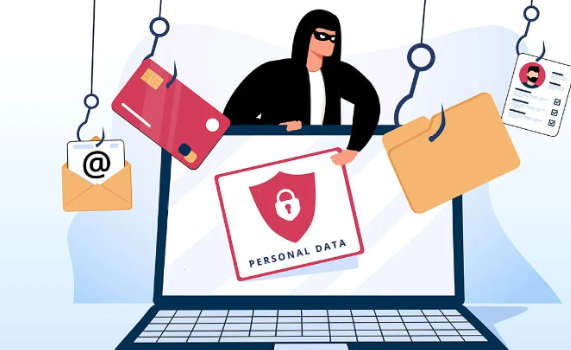
Lessons from a scam artist

Impersonation

Frank Abagnale is widely recognized as the best con artist in American history. According to him, one of the ways he could successfully con people was through impersonation. In his book “The Art of the Steal” Frank Abagnale said: “Hotel clerks and merchants didn’t question pilots and doctors too closely.” He soon realized that when he impersonated doctors and pilots, people viewed him as someone with authority and would rarely question him if at all. This enabled him to cash nearly $2.5 million worth of checks. Con artists play on our own unconscious bias that people in authority are trustworthy.

Thanks to technology and social media, impersonation scams have grown exponentially. Impersonators create fake social media accounts that include the names, images, logos, or other identifying information, of a person, brand, or organization. This is one of the easiest forms of impersonation for scammers, which explains the drastic increase in the number of fake social media accounts. Facebook alone removed nearly 1.8 billion fake accounts in 2021. Impersonation is often used in phishing, SMiShing, and vishing. This means that most of us have already been exposed to impersonators via one of these methods.

Urgency

You’re done with your workday, about to log off. But at that very moment your boss emails you telling you to buy some Apple gift cards from a nearby store for a presentation they have. At first glance the email looks legit, but then you stop and realize he’s asking you to do something unusual. You realize the email is a scam. This scenario illustrates how scammers use urgency to trick people into giving them money or personal information. They may claim that you need to act immediately to collect a prize, pay a bill, or protect your identity. They may also say that there is only limited time to take advantage of a special offer. These tactics can be very effective in pressuring people into making a decision before they have time to think or verify if the offer is legitimate.

Prey on Emotions

Scammers have become experts in using social engineering techniques to their advantage. While not all social engineering is bad, scammers specialize in triggering emotions to exploit our weaknesses. They use emotions such as fear, curiosity, and greed, in order to get people to comply with their demands. At times, they may use sympathy and claim that they need money for an emergency situation. In other cases, they may appeal to your sense of generosity or kindness asking for donations for a good cause.

Lessons Learned

We can learn much by getting to know the tactics of our impostors. Some of the tactics they use include impersonation, creating a sense of urgency, and manipulating our feelings. Knowledge is power. Staying up to date regarding these attacks will increase our awareness and help to avoid falling victim to them. The Federal Trade Commission gives the following tips to avoid falling victim to scammers:

1. They PRETEND to be from an organization you know.

Scammers often pretend to be contacting you on behalf of the government. They might use a real name, like the Social Security Administration, the IRS, or Medicare, or make up a name that sounds official. Some pretend to be from a business you know, like a utility company, a tech company, or even a charity asking for donations.

They use technology to change the phone number that appears on your caller ID. So the name and number you see might not be real.

2. Scammers say there’s a PROBLEM or a PRIZE.

They might say you’re in trouble with the government. They may also say you owe money, or that someone in your family had an emergency, or that there’s a virus on your computer.

Some scammers say there’s a problem with one of your accounts and that you need to verify some information.

3. They PRESSURE you to act immediately.

Scammers want you to act before you have time to think. If you’re on the phone, they might tell you not to hang up so you can’t check out their story. They might threaten to arrest you, sue you, take away your driver’s or business license, or deport you. They might say your computer is about to be corrupted.

4. Scammers tell you to PAY in a specific way.

They often insist that you pay by using cryptocurrency, by wiring money through a company like MoneyGram or Western Union, or by putting money on a gift card and then giving them the number on the back.

The More You Know

The goal of a criminal is to keep you from thinking critically. They generally do this by targeting emotions, as discussed above. Because of this, the most powerful weapon against social engineering attacks is critical thinking. Given the emotional nature of these attacks, there may not be a specific tool or process that can prevent us from falling victim to human vulnerability. However, being aware of such vulnerability enables you to pause and think of the request. Ask yourself, is this request reasonable? Why are they asking this of me? Should I do this?

Corporations and individuals are becoming more aware of social engineering attacks and are looking for ways to protect themselves. One way to do this is by learning as much as possible about the tactics that malicious actors use, as well as implementing best security practices. Whether you want to protect yourself against social engineering attacks or learn more about human behavior, the Foundational Application of Social Engineering class is a 4-day immersive course that specializes in the field of social engineering offering practical exercises which provide a lasting learning experience.

Rosa Rowles

At Social-Engineer LLC, our purpose is to bring education and awareness to all users of technology. For a detailed list of our services and how we can help you achieve your information/cybersecurity goals please visit:

https://www.Social-Engineer.com/Managed-Services/.

*** This is a Security Bloggers Network syndicated blog from Security Through Education authored by Social-Engineer. Read the original post at: https://www.social-engineer.org/social-engineering/lessons-from-a-scam-artist/

March 22, 2023March 22, 2023 Social-Engineer General Social Engineer Blog, how do scammers use social engineering, impersonation, Lessons from a scam artist, Phishing, smishing, social engineering, techniques scammers use, vishing
  • ← Weak Passwords Offer Easy Access to Enterprise Networks
  • Introducing the Executive Dashboard →

Techstrong TV

Click full-screen to enable volume control
Watch latest episodes and shows

Tech Field Day Events

Upcoming Webinars

True Agentic SecOps at Lakehouse Scale
Agentic Software Delivery in 2026: How To Bridge The Gap Between AI Ambition and Delivery Confidence
Untangling the EU Cyber Resilience Act
The Software Supply Chain Just Got Harder to See
Building a Resilient Security Culture in the AI Era with AWS & Datadog

Podcast

Listen to all of our podcasts

Secure by Design

2 weeks ago | Jack Poller

Senator Sanders Wants to Own AI Companies — and Hand America’s Adversaries the Keys

3 weeks ago | Jack Poller

NIST’s Nine: The PQC Signature Race Moves to Round Three

3 weeks ago | Jack Poller

The Quantum Arms Race: Why Washington Just Wrote a $2 Billion Check to Nine Companies

1 month ago | Jack Poller

Beyond Moore’s Law: The Hyper-Acceleration of Autonomous AI Cyber Capabilities

1 month ago | Jack Poller

The Exception Economy: When Security Teams Stop Protecting and Start Negotiating

Press Releases

GoPlus's Latest Report Highlights How Blockchain Communities Are Leveraging Critical API Security Data To Mitigate Web3 Threats

GoPlus’s Latest Report Highlights How Blockchain Communities Are Leveraging Critical API Security Data To Mitigate Web3 Threats

C2A Security’s EVSec Risk Management and Automation Platform Gains Traction in Automotive Industry as Companies Seek to Efficiently Meet Regulatory Requirements

C2A Security’s EVSec Risk Management and Automation Platform Gains Traction in Automotive Industry as Companies Seek to Efficiently Meet Regulatory Requirements

Zama Raises $73M in Series A Lead by Multicoin Capital and Protocol Labs to Commercialize Fully Homomorphic Encryption

Zama Raises $73M in Series A Lead by Multicoin Capital and Protocol Labs to Commercialize Fully Homomorphic Encryption

RSM US Deploys Stellar Cyber Open XDR Platform to Secure Clients

RSM US Deploys Stellar Cyber Open XDR Platform to Secure Clients

ThreatHunter.ai Halts Hundreds of Attacks in the past 48 hours: Combating Ransomware and Nation-State Cyber Threats Head-On

ThreatHunter.ai Halts Hundreds of Attacks in the past 48 hours: Combating Ransomware and Nation-State Cyber Threats Head-On

Subscribe to our Newsletters

Most Read on the Boulevard

Google Sues Chinese Threat Group Using Gemini AI in Phishing Scams
Ten Great Cybersecurity Job Opportunities
SailPoint Acquires Entro to Continuously Detect and Monitor Non-Human Identities
Databricks Acquires Cybersecurity Startup Panther Labs to Fortify AI Defense
Malwarebytes Finds Ad Scams Hidden in 40+ World Cup Streaming Sites
Iranian Cyber Group Handala Claims Cal Water Hack
CISA to Require Federal Agencies to Patch Some Vulnerabilities Within 3 Days
Claude Fable 5’s pricing makes Sonar Context Augmentation a potent cost lever
CVSS Is Officially Dead: What CISA’s BOD 26-04 Means for Everyone
How You Actually Secure Systems: Using OWASP and NIST Together

Industry Spotlight

Anthropic Mythos AI Model Strikes Fear in Trump Administration, U.S. Banks
Cloud Security Cybersecurity Data Privacy Data Security Featured Incident Response Industry Spotlight Malware Mobile Security Network Security News Security Awareness Security Boulevard (Original) Social - Facebook Social - LinkedIn Social - X Spotlight Threats & Breaches Vulnerabilities 

Anthropic Mythos AI Model Strikes Fear in Trump Administration, U.S. Banks

April 12, 2026 Jeffrey Burt | Apr 12 Comments Off on Anthropic Mythos AI Model Strikes Fear in Trump Administration, U.S. Banks
The Day the Security Music Died
AI and Machine Learning in Security Cybersecurity Featured Industry Spotlight Security Boulevard (Original) Social - Facebook Social - LinkedIn Social - X Spotlight 

The Day the Security Music Died

April 8, 2026 Alan Shimel | Apr 08 Comments Off on The Day the Security Music Died
The Lock, Not the Alarm: How Palo Alto’s Koi Acquisition Rewrites Endpoint Security
Featured Industry Spotlight Security Boulevard (Original) Social - Facebook Social - LinkedIn Social - X Spotlight Uncategorized 

The Lock, Not the Alarm: How Palo Alto’s Koi Acquisition Rewrites Endpoint Security

February 18, 2026 Jack Poller | Feb 18 Comments Off on The Lock, Not the Alarm: How Palo Alto’s Koi Acquisition Rewrites Endpoint Security

Top Stories

Trying to Control AI is Like Holding Sand
AI and Machine Learning in Security Cybersecurity Featured News Security Boulevard (Original) Social - Facebook Social - LinkedIn Social - X Spotlight 

Trying to Control AI is Like Holding Sand

June 17, 2026 Alan Shimel | Yesterday 0
F5 Embeds Neural Network in WAF Platform to Continuously Assess Risks
Application Security Cybersecurity Featured News Security Boulevard (Original) Social - Facebook Social - LinkedIn Social - X Spotlight 

F5 Embeds Neural Network in WAF Platform to Continuously Assess Risks

June 17, 2026 Michael Vizard | Yesterday 0
Malwarebytes Finds Ad Scams Hidden in 40+ World Cup Streaming Sites
Cloud Security Cybersecurity Data Privacy Data Security Featured Identity & Access Malware Mobile Security Network Security News Security Boulevard (Original) Social - Facebook Social - LinkedIn Social - X Social Engineering Spotlight Threat Intelligence 

Malwarebytes Finds Ad Scams Hidden in 40+ World Cup Streaming Sites

June 16, 2026 Jeffrey Burt | Yesterday 0

Security Humor

Randall Munroe’s XKCD 'Bottle'

Randall Munroe’s XKCD ‘Bottle’

Download Free eBook

[su_panel border="0px solid #ddd" radius="0" text_align="center" padding-top="0px" padding-bottom="0px"]
7 Must-Read eBooks for Security Professionals
[/su_panel]

Security Boulevard Logo White

DMCA

Join the Community

  • Add your blog to Security Creators Network
  • Write for Security Boulevard
  • Bloggers Meetup and Awards
  • Ask a Question
  • Email: [email protected]

Useful Links

  • About
  • Media Kit
  • Sponsor Info
  • Copyright
  • TOS
  • DMCA Compliance Statement
  • Privacy Policy

Related Sites

  • Techstrong Group
  • Cloud Native Now
  • DevOps.com
  • Digital CxO
  • Techstrong Research
  • Techstrong TV
  • Techstrong.tv Podcast
  • DevOps Chat
  • DevOps Dozen
  • DevOps TV
Powered by Techstrong Group
Copyright © 2026 Techstrong Group Inc. All rights reserved.
×

Insert/edit link

Enter the destination URL

Or link to existing content

    No search term specified. Showing recent items. Search or use up and down arrow keys to select an item.