

Money Laundering and Counter-Terrorist Financing: What is FATF?

The Financial Action Task Force (FATF) was established in 1989. It built a list of Forty Recommendations for countries to address Money Laundering, which were first issued in 1990, and revised in 1996, 2001, 2003, and 2012. Their latest FATF Annual Report (2017-2018) addresses Terrorist financing as well as new methods and trends and announces a research project on financing of recruitment for terrorism. Many of these Recommendations meet our lives in the form of regulations on financial institutions and interactions between international law enforcement agencies.
“Regardless of their size and complexity, the financial activities and channels of terrorists are an essential source of intelligence. Financial investigation can identify terrorist cells, their associates and facilitators, and reveal the structure of terrorist groups, and their logistics and facilitation networks.” — FATF President Santiago Otamendi, 14DEC2017, NYC.
FATF also released an important report “Financing of Recruitment for Terrorist Purposes” in January 2018, and a second report “Concealment of Beneficial Ownership” in July 2018.
|
|


The FATF Forty Recommendations on Money Laundering and Counter Terrorism Finance
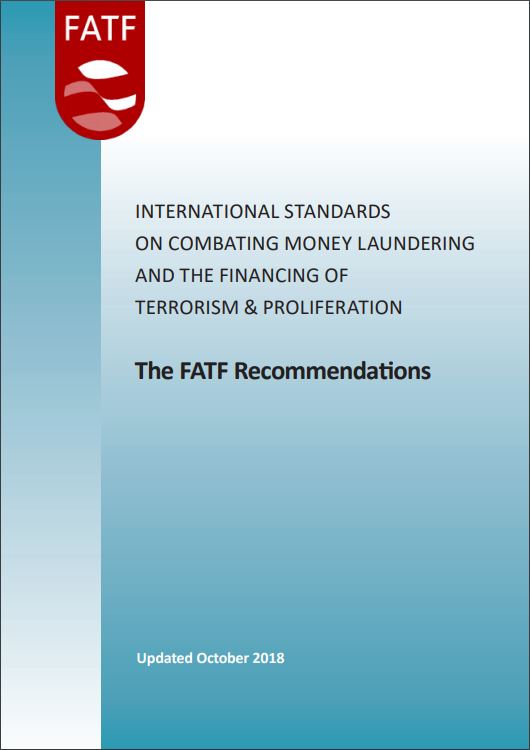 |
| International Standards on Combating Money Launderingand the Financing of Terrorism& Proliferation (Oct 2018) |
A – AML/CFT Policies and Coordination
- R1. Asessing risks & applying a risk-based approach
- R2. National cooperation and coordination
B – Money Laundering and Confiscation
- R3. Money laundering offense
- R4. Confiscation and provisional measures
C – Terrorist Financing and Financing of Proliferation
- R5. Terrorist financing offense
- R6. Targeted financial sanctions related to terrorism and terrorist financing
- R7. Targeted financial sanctions related to proliferation
- R8. Non-profit organizations
D – Preventative Measures
- R9. Financial institution secrecy laws
- R10. Customer due diligence
- R11. Record keeping
- R12. Politically exposed persons
- R13. Correspondent banking
- R14. Money or Value transfer services
- R15. New technologies
- R16. Wire transfers
- R17. Reliance on third parties
- R18. Internal controls and foreign branches and subsidiaries
- R19. Higher-risk countries
- R20. Reporting of suspicious transactions
- R21. Tipping-off and confidentiality
- R22. Designated non-Financial Businesses and Professions: Customer due diligence
- R23. Designated non-Financial Businesses and Professions: Other measures
E – Transparency and Beneficial Ownership of Legal Persons and Arrangements
- R24. Transparency and beneficial ownership of legal persons
- R25. Transparency and beneficial ownership of legal arrangements
F – Powers and Responsibilities of Competent Authorities and Other Institutional Measures
- R26. Regulation and supervision of financial institutions
- R27. Powers of supervisors
- R28. Regulation and supervision of Designated non-Financial Businesses and Professions
- R29. Financial intelligence units
- R30. Responsibilities of law enforcement and investigative authorities
- R31. Powers of law enforcement and investigative authorities
- R32. Cash couriers
- R33. Statistics
- R34. Guidance and feedback
- R35. Sanctions
G – International Cooperation
- R36. International instruments
- R37. Mutual legal assistance
- R38. Mutual legal assistance: freezing and confiscation
- R39. Extradition
- R40. Other forms of international cooperation
Mutual Evalution and Ranking of Members
 |
| 4th Round Ratings |
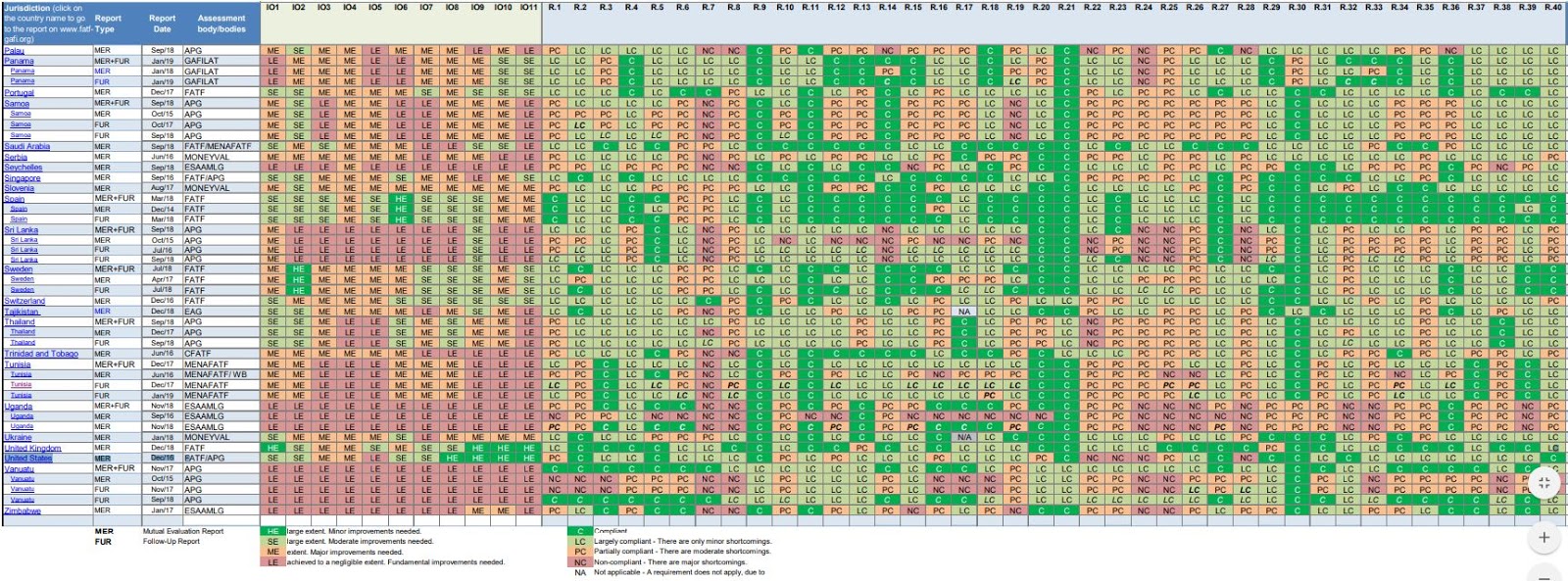
In this chart, each member state, including the Associate members, is ranked on how well they comply with each of the 11 “Immediate Outcomes” and 40 Recommendations. For example, the United States is currently not compliant with recommendations 22, 23, and 24 — so, we don’t do well in non-financial institutions, and our shell company games are impossible to monitor as of now, but we do generally do well in most others. Clicking the “4th Round Ratings” label will take you to the full chart. If you do international business, it may be a form of risk doing businesses in countries with poor ratings across the board here.
FATF Member Assessments
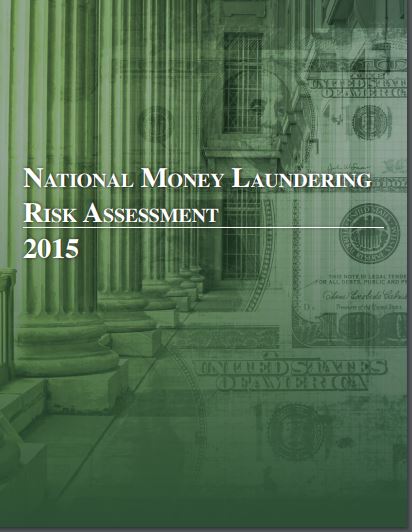
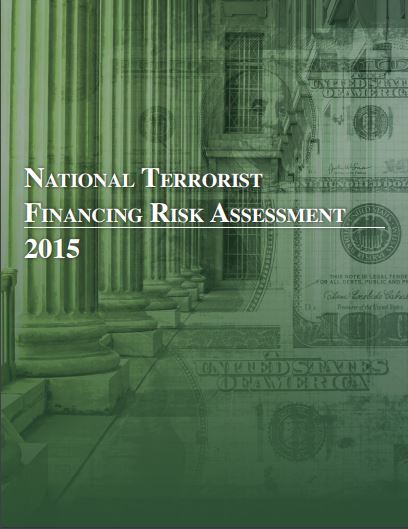
Each member is encouraged to perform regular assessments to measure themselves on how they are complying with the Forty Recommendations. Here are example reports from the United States, but these reports are available for every country that participates in FATF or one of the Associate Members. In the United States, these assessments are published by the Department of the Treasury. These reports were issued in 2015 by the Treasury Undersecretary for Terrorism and Financial Intelligence, Adam Szubin.
|
|
FATF Associate Members
FATF also has 9 Regional Bodies, considered “FATF Associate Members” each of which put out specialized information for their portion of the world. For those who are interested in that Region, following up on those specific regions reports from their representative task forces and groups will be worthwhile.
- The Asia / Pacific Group on Money Laundering (APG)
- The Caribbean Financial Action Task Force (CFATF)
- The Eurasian Group (EAG) – English version
- (one particularly interesting report from EAG was Cybercrime and Money Laundering in 2014)
- The Eastern and Southern Africa Anti-Money Laundering Group (ESAAMLG)
- The Task Force on Money Laundering in Central Africa // Groupe d’Action contre le blanchiment d’Argent en Afrique Centrale (GABAC) – seems to be only in French
- El Grupo de Accion Financiera de Latinoamerica (GAFILAT) – in Spanish
- (has a sub-working group, the Grupo de Trabajo de Financiamiento del Terrorismo (GTFT) for Terrorist Financing issues) – their most recent recommendations document from November 2018 is also useful (but also only in Spanish)
- The Inter Governmental Action Group Against Money Laundering in West Africa (GIABA)
- In addition to the annual report for the Region, there are many country specific reports – with perhaps the most interesting being Nigeria’s National Money Laundering & Terrorist Financing Risk Assessment report. (<= link is to the full report index)
- The Middle East and North Africa Financial Action Task Force (MENAFATF)
- One activity of interest here is that each country is being reviewed by the other members in “Mutual Evaluation Reports” for how they are doing complying with the FATF Forty Recommendations. All of the member countries went through the first round of the process, with published reports, between 2007 and 2012. Tunisia, Bahrain, Saudi Arabia, and Mauritania have completed the process as of this writing.
- The Committee of Experts on the Evaluation of Anti-Money Laundering Measures (MONEYVAL) covers most of Eastern Europe.
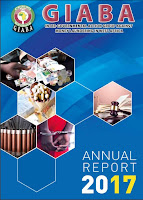 |
| GIABA 2017 Annual Report |
A Special Focus on Terrorist Financing Risks
Regional Terrorist Financing Focuses
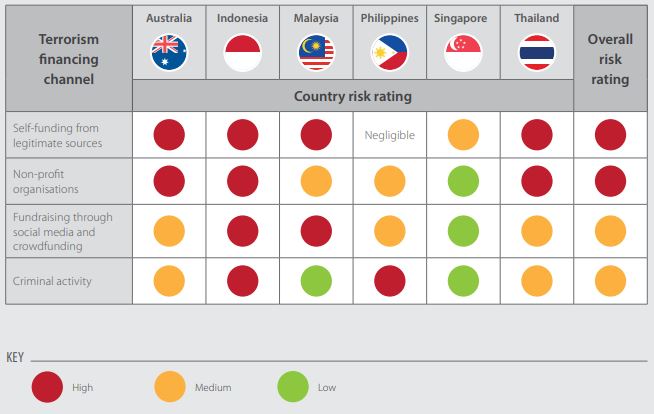 |
| A risk methodology for their region (p.22) |
 |
| “Terrorist Financing in West and Central Africa”, October 2016 50 page joint report from FATF, GIABA, and GABAC |
Particular Funding Methods for Terrorism Finance
Virtual Currencies of Growing Concern

*** This is a Security Bloggers Network syndicated blog from CyberCrime & Doing Time authored by Gary Warner, UAB. Read the original post at: http://garwarner.blogspot.com/2019/01/money-laundering-and-counter-terrorist.html
