
Adaptive Security at Scale: Why Detection Alone Fails Without Orchestration and Operational Design


Security systems now generate continuous streams of signals. Network traffic, APIs, cloud services, and third-party integrations all produce alerts. The volume is not the constraint. Converting those signals into clear, coordinated action is.
At scale, signals and responses do not happen in the same place. A threat may be detected in one system but require action across many others. This slows things down, even when detection is accurate.
Adaptive security focuses on this gap. Having worked on enterprise-scale security platforms, I have seen how connecting detection with response allows systems to act quickly and consistently.
Detection Happens Quickly. Containment Does Not
IBM’s Cost of a Data Breach Report 2024 shows that breaches involving stolen or compromised credentials take an average of 292 days to identify and contain, contributing to a global average breach cost of $4.88 million.
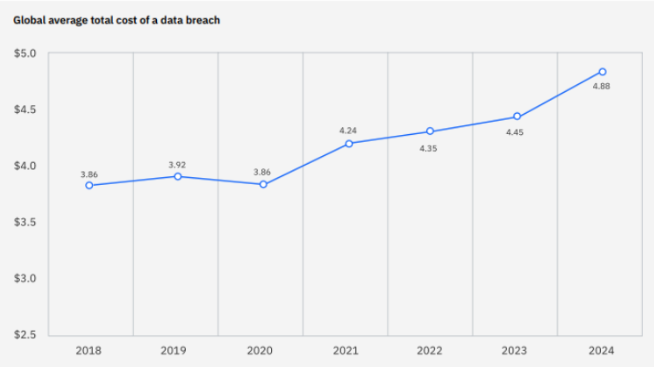
That timeline includes organizations with mature monitoring capabilities. Alerts are often generated early in the lifecycle. The delay comes from investigation, escalation, and execution.
Alerts Accumulate Faster Than They Are Resolved
Every system produces alerts, but not every alert leads to action. The 2025 Unit 42 Global Incident Response Report found that 13% of social engineering incidents were traced back to ignored or untriaged alerts.
That failure point is not driven by a lack of visibility. It emerges from how alerts are processed. Devo’s 2025 SOC research shows that 83% of analysts are overwhelmed by alert volume, false positives, and lack of context, while 85% spend significant time manually correlating data before an alert becomes actionable.
Work is often duplicated before a decision is even made. 84% of organizations report analysts unknowingly investigating the same incidents multiple times, with many encountering duplication on a weekly basis. This reduces the time available for actual response and containment.
The workflow remains largely reactive. Nearly 47% of analysts rely on alerts as the primary way to discover incidents, rather than proactive investigation.
Response Depends on Systems That Do Not Share a Control Plane
Enterprise security commonly spans multiple environments. Cloud platforms, APIs, edge networks, and third-party services each operate independently. Detection systems aggregate signals, but enforcement remains distributed.
Flexera reports that 89% of organizations use multi-cloud strategies, with 73% operating hybrid environments.

IBM’s report shows that 40% of breaches involve data spread across multiple environments, such as public cloud, private cloud, and on-premise systems. These multi-environment breaches cost more than $5 million on average and take the longest to identify and contain, at 283 days.
The higher cost is tied to coordination complexity. Data is distributed, often unencrypted, and harder to track across systems, including shadow data and AI workloads. This makes containment slower and increases the risk of exposing sensitive records such as customer and employee PII, which are the most frequently compromised and the most expensive to remediate.
Adaptive Security Connects Detection to Execution
Adaptive security is often described as predicting threats. A simpler way to understand it is this: systems need to adjust in real time as things change. Traffic changes. Infrastructure changes. Attacks change. Security has to keep up.
In large organizations, security does not run in one place. It is spread across networks, cloud systems, APIs, and third-party tools. Each part sees something different. Acting on a threat means getting all of those parts to respond together.
At a basic level, adaptive security works in three steps:
- Detection spots something suspicious
- Orchestration decides what to do
- Mitigation carries out the action across systems
Problems happen when these steps are not connected. A threat is detected, but no one is sure what action to take. Or a decision is made, but different systems respond in different ways.
Where Things Break After Detection
At scale, that breakdown usually happens in three areas.
First, teams are often not aligned in advance on what a safe response looks like. The question is not simply whether to block traffic. The real question is how to mitigate the threat without disrupting legitimate users, customers, or partners. If these decisions are not defined ahead of time, teams lose valuable time during an incident.
Second, ownership is often fragmented. The signal may be clear, but the teams responsible for applications, networks, and business impact are not operating through a shared response model. Coordination becomes slow and inconsistent.
Third, many organizations have response plans that exist on paper but have not been tested. A process may be documented, but if it has not been exercised in real conditions, it often fails when attack conditions change.
A big part of making security work at scale is deciding key actions in advance:
- What protections should already be in place
- How escalation works
- What customer-specific considerations matter
- How response adapts as conditions change
Why Orchestration Matters
Detection gives you the signal, but orchestration is what allows that signal to turn into coordinated action across systems, teams, and controls.
Without orchestration, teams rely on manual coordination. With it, decisions are predefined and execution becomes consistent.
Research from Gartner shows that organizations improve response time and consistency when they connect decisions directly to execution using orchestration and automation.
When Coordination Improves, Response Improves
Better coordination directly improves how systems respond. One example is when a customer already has clear visibility into malicious traffic, but stopping it still depends on fragmented infrastructure, disconnected controls, and too much manual coordination. Different teams and systems need to act, which slows response even when the threat is obvious. In this kind of environment, improving orchestration has more impact than improving detection.
Having worked on a global-scale cloud firewall platform, I have seen how shifting to proactive security controls at the edge, centralizing ACL management, and validating response paths in advance changes how systems behave. Instead of reacting during an attack, systems are prepared to respond immediately.
The result is not just faster mitigation. It is a more unified response across fragmented environments, lower operational burden, and less impact on the customer’s own infrastructure during an attack.
Real-World Constraints Make This Harder
Security decisions are not made in isolation. Systems need to stay online. Users expect services to work without interruption.
Every action has trade-offs:
- Acting quickly may block real users
- Acting slowly may let the attack continue
Automation Helps, But People Still Matter
At scale, an automation-only model can become too rigid. It may respond quickly, but without enough context around customer environments, business priorities, or changing attack conditions, it can create unnecessary disruption or apply the wrong action too broadly. That is why adaptive security needs a balance of automation, operational structure, and human judgment.
Experienced teams can interpret ambiguous signals, understand the broader context of the attack, recognize when something does not fit known patterns, and make judgment calls that a purely automated system may not make well. They also help ensure the response is shaped by customer impact and business context, not just technical indicators.
Adaptive security works best when automation handles scale and repeatability, while human expertise strengthens the system where nuance, uncertainty, and adversary sophistication matter most.

