

Sunday, June 14, 2026

Security Boulevard Logo

Security Boulevard

The Home of the Security Bloggers Network

Community Chats Webinars Library
  • Home
    • Cybersecurity News
    • Features
    • Industry Spotlight
    • News Releases
  • Security Creators Network
    • Latest Posts
    • Syndicate Your Blog
    • Write for Security Boulevard
  • Webinars
    • Upcoming Webinars
    • Calendar View
    • On-Demand Webinars
  • Events
    • Upcoming Events
    • On-Demand Events
  • Sponsored Content
  • Chat
    • Security Boulevard Chat
    • Marketing InSecurity Podcast
    • Techstrong.tv Podcast
    • TechstrongTV - Twitch
  • Library
  • Related Sites
    • Techstrong Group
    • Cloud Native Now
    • DevOps.com
    • Security Boulevard
    • Techstrong Research
    • Techstrong TV
    • Techstrong.tv Podcast
    • Techstrong.tv - Twitch
    • Devops Chat
    • DevOps Dozen
    • DevOps TV
  • Media Kit
  • About
    • Sponsor

  • Analytics
  • AppSec
  • CISO
  • Cloud
  • DevOps
  • GRC
  • Identity
  • Incident Response
  • IoT / ICS
  • Threats / Breaches
  • More
    • Blockchain / Digital Currencies
    • Careers
    • Cyberlaw
    • Mobile
    • Social Engineering
  • Humor
Security Bloggers Network 

Home » Security Bloggers Network » State of API Security Activity

SBN

State of API Security Activity

by The CQ Prime Team on May 19, 2022

A recap of API threat statistics and unique threat patterns observed by the Cequence CQ Prime Threat Research Team.
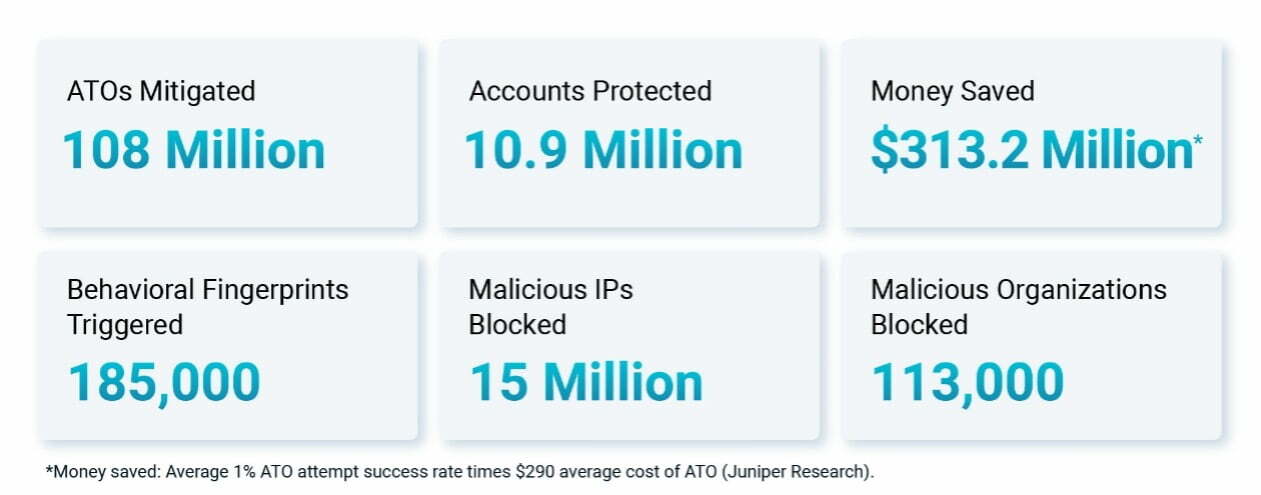
API Security Activity Summary Key Findings

Summary of Key Findings

  • Unusual uptick in traffic from China spiking at a 200% increase
  • User-experience business logic was abused to commit fraudulent purchases on stolen cards
  • Pop in traffic from a holding company for scraping and hosting services

API Security Trends Observed

Between late February and early April 2022, the Cequence API Security Platform mitigated 108 million ATO attempts, using behavioral fingerprints and blocking millions of malicious IP addresses and organizations. During that same timeframe, the Cequence CQ Prime Threat Research Team observed an unusual uptick in traffic from China across the board, bucking the common bot tactic of blending in with normal traffic. In early March, the team tracked a sophisticated recon effort as a threat actor abused e-commerce user-experience business logic to attempt to commit fraudulent purchases on stolen credit cards through automated account creation. Finally, the team observed a notable pop in traffic from an organization Emeigh Investments LLC which appears to be the holding company for a set of scraping & hosting services.

Uptick in Traffic from China

To ensure their bot achieves its end goal, threat actors will typically make every effort to hide their bot traffic within legitimate end user requests. This means following the same buying process a user follows, funneling traffic through local, residential proxies, and so on. The Cequence CQ Prime Threat Research Team observed a steady uptick in traffic from China beginning in February and spiking at a 200% increase in early March. This pattern deviates from the hide in plain sight approach that bots typically follow, given the target customers were in the US and EMEA and did not transact much business with customers in China.
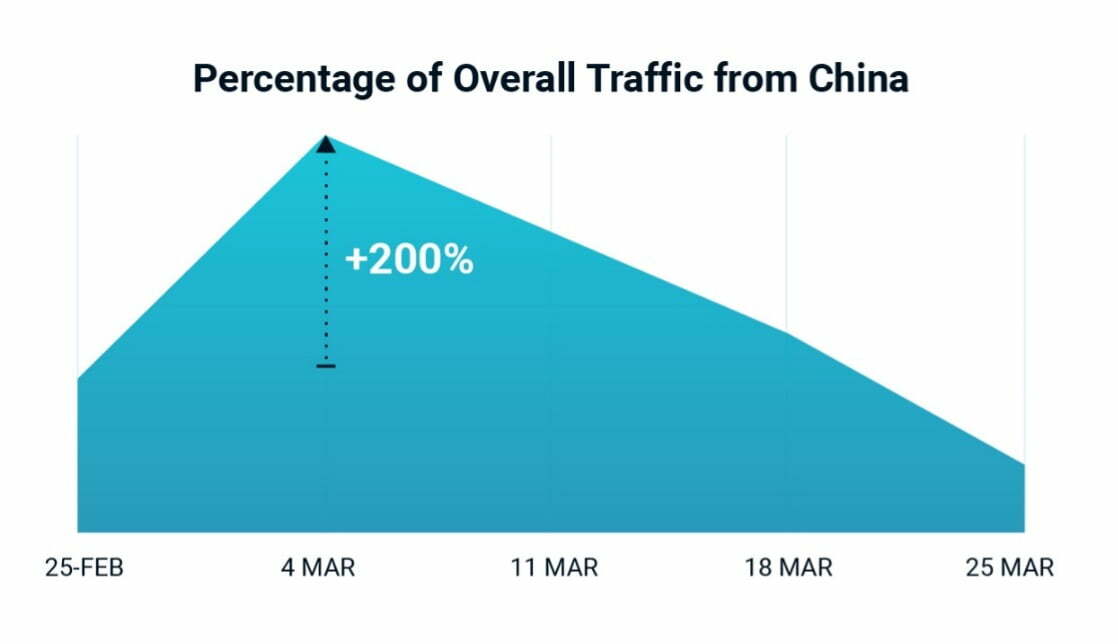
Uptick in malicious traffic from China as a percentage of overallImage 1: Uptick in malicious traffic from China as a percentage of overall.

While the overall volume of traffic from China is small, the uptick shown in image 1 is worth noting as it was observed across multiple customers in the US and EMEA.

  • Account takeover was the most common attack type observed within the traffic from China with roughly 600K ATO attempts emanating from China detected and blocked while protecting 265K unique user accounts, resulting in a customer savings of $1.46M, based on the Juniper Research report that states ATOs cost an average of $290 per account.
  • One of the patterns observed saw the threat actor rotate across multiple login API endpoints on 15 minute intervals with traffic bursts of up to 80% of the normal traffic volume of a given API. At least 10 different Behavioral Fingerprints were triggered, representing signs of automation such as the same userID on many different IP addresses, further confirming that this was an automated.
  • Attack traffic was distributed across 400K IPs from 168 organizations with most common being China Telecom, 189.cn, China Telecom Jiangx, CHINATELECOM Xinjiang Wulumuqi MAN network and Chunghwa Telecom.

Sophisticated Reconnaissance

In an example of how dedicated threat actors are, the Cequence CQ Prime Threat Research team observed an attacker methodically map a customer’s entire site to learn the precise workflow and uncover any potential weaknesses. The threat actor created an account then tested how it could be abused with an end goal of gift card fraud or fradulent purchases using stolen credit cards. The weaknesses the attacker exploited are common in online retail environments where important decisions regarding the tradeoff between shopper experience and security must be made. In this case, the attacker found that the account creation workflow would immediately authenticate, and authorize a user to do subsequent privileged actions like edit/change payment details. From an end-user perspective, this flow makes sense to reduce user friction for recently created accounts. However attackers realized they could use bots to abuse this business logic, and create accounts en masse. The attacker was committed to remaining undetected as they distributed more than 1.5M requests across 132,660 IPs from 20+ organizations. Ultimately, the attack triggered hundreds of Behavioral Fingerprints representing actions including use of outdated browsers, malicious traffic source, and rapid user-agent rotation.
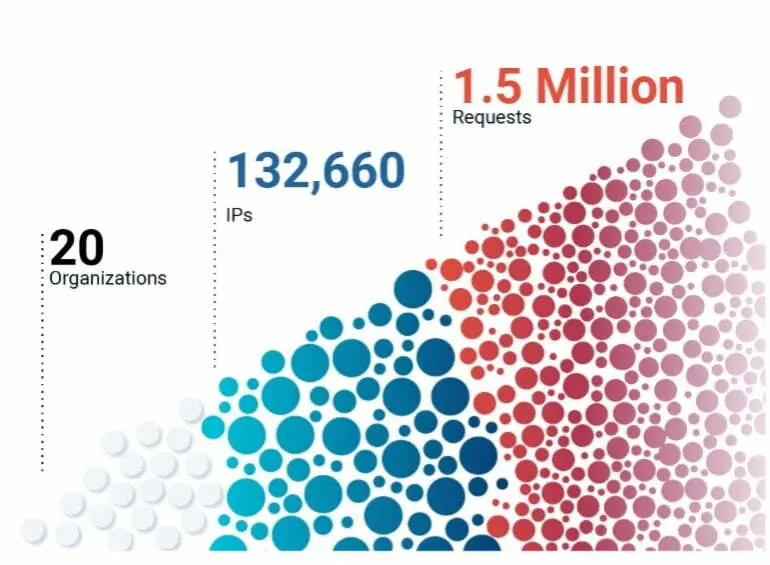
API Security Activity Summary - Malicious traffic observed during a sophisticated reconnaissance effort

Image 2: Malicious traffic observed during a sophisticated reconnaissance effort.

New Bulletproof Proxy Provider?

The threat team observed an ATO attack that encompassed 8.7M requests distributed across 1.1M residential proxies from 20 or so organizations. The threat actor rapidly retooled, triggering hundreds of Behavioral Fingerprints with actions that include many user names logging in from same IP, too many account verification attempts from same IP and same userid accessed over multiple IP addresses. One of the interesting characteristics of this attack is the emergence of a new organization as the source for malicious traffic. While only a small percentage of the traffic, the threat team observed a spike in use from Emeigh Investments LLC, a holding company for Sprious (https://sprious.com/), which names Blazing SEO (https://blazingseollc.com/), Scraping Robot, (https://scrapingrobot.com/) and WP Super Host (https://wpsuperhost.com/) as partner companies. The likely source of the IP addresses is Blazing SEO, given that their product line includes both data center and residential proxy offerings. The spike is of interest because of the somewhat sudden appearance as a top source of malicious traffic. As noted in the chart, they were more heavily used then Cogent and ServerMania – two sources that are constantly at the top of the list of organizations whose infrastructure is used in automated attacks against our customers.
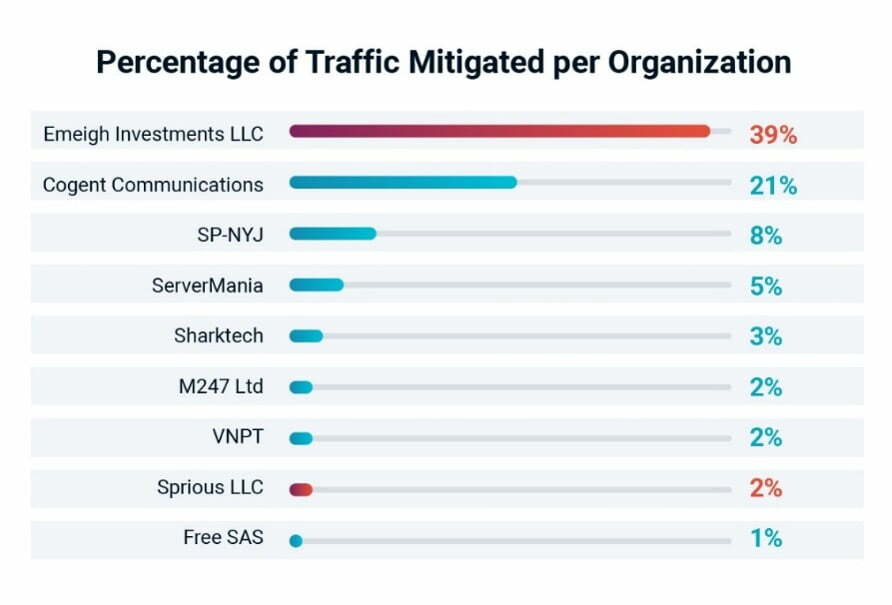
A potentially new Bulletproof Proxy vendor appeared in Q1 2022

Image 3: A potentially new Bulletproof Proxy vendor appeared in Q1 2022.

As documented in our ongoing research on Bulletproof Proxies, these vendors walk a thin line between legitimate and malicious use. Their services can certainly be of benefit to web masters and marketing teams who wish to test the performance of their web site. However, their tools are commonly used as integral elements of an automated attack. For a very low cost, a bot manager can subscribe to their services and easily distribute their attack across many, many IP addresses from a range of cities, states and countries. All with the end goal of masking identity and location while achieving scale.

The post State of API Security Activity appeared first on Cequence.

*** This is a Security Bloggers Network syndicated blog from Cequence Security authored by The CQ Prime Team. Read the original post at: https://www.cequence.ai/blog/state-of-api-security-activity/

May 19, 2022May 19, 2022 The CQ Prime Team account takeover, API security, bulletproof proxies, business logic abuse, content scraping, Threat Research
  • ← State of API Security Activity
  • Vendor Introduction: oort.io →

Techstrong TV

Click full-screen to enable volume control
Watch latest episodes and shows

Tech Field Day Events

Upcoming Webinars

Agentic Software Delivery in 2026: How To Bridge The Gap Between AI Ambition and Delivery Confidence
The Cost of Exposure: Managing the Operational Risks of Executive Security Incidents
Untangling the EU Cyber Resilience Act
The Software Supply Chain Just Got Harder to See
Building a Resilient Security Culture in the AI Era with AWS & Datadog

Podcast

Listen to all of our podcasts

Secure by Design

2 weeks ago | Jack Poller

Senator Sanders Wants to Own AI Companies — and Hand America’s Adversaries the Keys

3 weeks ago | Jack Poller

NIST’s Nine: The PQC Signature Race Moves to Round Three

3 weeks ago | Jack Poller

The Quantum Arms Race: Why Washington Just Wrote a $2 Billion Check to Nine Companies

4 weeks ago | Jack Poller

Beyond Moore’s Law: The Hyper-Acceleration of Autonomous AI Cyber Capabilities

1 month ago | Jack Poller

The Exception Economy: When Security Teams Stop Protecting and Start Negotiating

Press Releases

GoPlus's Latest Report Highlights How Blockchain Communities Are Leveraging Critical API Security Data To Mitigate Web3 Threats

GoPlus’s Latest Report Highlights How Blockchain Communities Are Leveraging Critical API Security Data To Mitigate Web3 Threats

C2A Security’s EVSec Risk Management and Automation Platform Gains Traction in Automotive Industry as Companies Seek to Efficiently Meet Regulatory Requirements

C2A Security’s EVSec Risk Management and Automation Platform Gains Traction in Automotive Industry as Companies Seek to Efficiently Meet Regulatory Requirements

Zama Raises $73M in Series A Lead by Multicoin Capital and Protocol Labs to Commercialize Fully Homomorphic Encryption

Zama Raises $73M in Series A Lead by Multicoin Capital and Protocol Labs to Commercialize Fully Homomorphic Encryption

RSM US Deploys Stellar Cyber Open XDR Platform to Secure Clients

RSM US Deploys Stellar Cyber Open XDR Platform to Secure Clients

ThreatHunter.ai Halts Hundreds of Attacks in the past 48 hours: Combating Ransomware and Nation-State Cyber Threats Head-On

ThreatHunter.ai Halts Hundreds of Attacks in the past 48 hours: Combating Ransomware and Nation-State Cyber Threats Head-On

Subscribe to our Newsletters

Most Read on the Boulevard

Zscaler Launches Industry-First Zero Trust Security for Agentic AI
Anthropic’s Mythos Can Serve Up N-Day Exploits in Minutes or Hours
Linux Kernel Bug Caused by Single Character Opens Path to Root Access
ServiceNow Fixes Flaw That Could Lead to Unauthorized Access to Instances
HackerOne Unveils Agentic AI Platform to Discover and Validate Vulnerabilities Faster
Microsoft’s June 2026 Patch Tuesday Addresses 198 CVEs ( CVE-2026-49160, CVE-2026-50507)
ServiceNow Breach Explained: API Exposure, Risks & Security
Atomic Arch npm Campaign Adds Malicious Dependency
ServiceNow Discloses Security Incident Exposing Customer Data
Top 8 AI App Dev Platforms in 2026

Industry Spotlight

Anthropic Mythos AI Model Strikes Fear in Trump Administration, U.S. Banks
Cloud Security Cybersecurity Data Privacy Data Security Featured Incident Response Industry Spotlight Malware Mobile Security Network Security News Security Awareness Security Boulevard (Original) Social - Facebook Social - LinkedIn Social - X Spotlight Threats & Breaches Vulnerabilities 

Anthropic Mythos AI Model Strikes Fear in Trump Administration, U.S. Banks

April 12, 2026 Jeffrey Burt | Apr 12 Comments Off on Anthropic Mythos AI Model Strikes Fear in Trump Administration, U.S. Banks
The Day the Security Music Died
AI and Machine Learning in Security Cybersecurity Featured Industry Spotlight Security Boulevard (Original) Social - Facebook Social - LinkedIn Social - X Spotlight 

The Day the Security Music Died

April 8, 2026 Alan Shimel | Apr 08 Comments Off on The Day the Security Music Died
The Lock, Not the Alarm: How Palo Alto’s Koi Acquisition Rewrites Endpoint Security
Featured Industry Spotlight Security Boulevard (Original) Social - Facebook Social - LinkedIn Social - X Spotlight Uncategorized 

The Lock, Not the Alarm: How Palo Alto’s Koi Acquisition Rewrites Endpoint Security

February 18, 2026 Jack Poller | Feb 18 Comments Off on The Lock, Not the Alarm: How Palo Alto’s Koi Acquisition Rewrites Endpoint Security

Top Stories

ServiceNow Fixes Flaw That Could Lead to Unauthorized Access to Instances
Cloud Security Cybersecurity Data Privacy Data Security Featured Identity & Access Incident Response Mobile Security Network Security News Security Awareness Security Boulevard (Original) Social - Facebook Social - LinkedIn Social - X Spotlight Vulnerabilities 

ServiceNow Fixes Flaw That Could Lead to Unauthorized Access to Instances

June 11, 2026 Jeffrey Burt | 2 days ago 0
Zscaler Launches Industry-First Zero Trust Security for Agentic AI
AI and ML in Security Cybersecurity Featured News Security Boulevard (Original) Social - Facebook Social - LinkedIn Social - X Spotlight Zero-Trust 

Zscaler Launches Industry-First Zero Trust Security for Agentic AI

June 10, 2026 Jon Swartz | 3 days ago 0
Anthropic’s Mythos Can Serve Up N-Day Exploits in Minutes or Hours
Cloud Security Cybersecurity Data Privacy Data Security Featured Incident Response Malware Mobile Security Network Security News Security Awareness Security Boulevard (Original) Social - Facebook Social - LinkedIn Social - X Spotlight Threat Intelligence Vulnerabilities 

Anthropic’s Mythos Can Serve Up N-Day Exploits in Minutes or Hours

June 9, 2026 Jeffrey Burt | 4 days ago 0

Security Humor

Randall Munroe’s XKCD 'Soniferous Aether'

Randall Munroe’s XKCD ‘Soniferous Aether’

Download Free eBook

[su_panel border="0px solid #ddd" radius="0" text_align="center" padding-top="0px" padding-bottom="0px"]
The State of Cloud Native Security 2020
[/su_panel]

Security Boulevard Logo White

DMCA

Join the Community

  • Add your blog to Security Creators Network
  • Write for Security Boulevard
  • Bloggers Meetup and Awards
  • Ask a Question
  • Email: [email protected]

Useful Links

  • About
  • Media Kit
  • Sponsor Info
  • Copyright
  • TOS
  • DMCA Compliance Statement
  • Privacy Policy

Related Sites

  • Techstrong Group
  • Cloud Native Now
  • DevOps.com
  • Digital CxO
  • Techstrong Research
  • Techstrong TV
  • Techstrong.tv Podcast
  • DevOps Chat
  • DevOps Dozen
  • DevOps TV
Powered by Techstrong Group
Copyright © 2026 Techstrong Group Inc. All rights reserved.
×

Insert/edit link

Enter the destination URL

Or link to existing content

    No search term specified. Showing recent items. Search or use up and down arrow keys to select an item.