

Trust Nothing, Verify Everything

The current global situation with the coronavirus or COVID-19 has led
many of us to respond with our work from home. Amidst so much
uncertainty, there are many of us who could be looking for reliable
information on the progress of this pandemic, on what are the symptoms
and what tests are available, and how we can protect ourselves and our
families. It is claimed that this is being exploited by
scammers, and one of their
methodologies may easily be phishing, which we will discuss below.
Phishing can be understood as a social engineering tactic in which
messages persuade the user to follow fraudulent web
routes,
to open attachments, or to reply to messages. All this generally to
extract sensitive
information.
It is one of the most effective cyber threats, posing risks to
government, industry, and all types of users. Millions of data breaches
have resulted from the action of phishing. And billions of dollars are
lost every
year.
The term ‘phishing’ apparently originated in 1996 when hackers
stealing data from American accounts took “emails as ‘hooks’ to catch
their ‘fish’ from the ‘sea’ of internet
users”. Victims
end up revealing confidential information about themselves, someone
else, or some entity to which they have access. Such information may
include passwords, bank account information, credit card numbers and
others.
Currently the attackers are going beyond emails. They are also making
considerable use of social networks, “instant messaging applications,
and online file-sharing
services”.
Beyond the extraction of information,
malware
(such as ransomware) can also be installed through
these attacks. The attacker can then request money transfers or
initiate unauthorized financial
transactions.
She can also lead to involuntary collaboration by the recipient to
commit a
scam
within a company (perhaps the simplest means of
entry).

Fraudulent emails—as part of a semantic
attack—
ask people for sensitive information to be revealed on fraudulent
websites but with the appearance of authentic
ones.
So, if you are a Playstation user, for example, you may receive a
supposed email from them presenting a false version of their website so
that you can enter your credentials there. A good graphic design makes
the user believe that the information is requested from a legitimate and
recognized organization or brand. When in fact it is the creative work
of a con
artist.
A site run by him or
her.
Wait a minute, what do you mean by a semantic attack?
According to Downs, Holbrook, and Cranor
(2006),
computer security attacks can be divided into: physical,
syntactic, and semantic. The first are aimed at the physical
infrastructure of systems and networks. The second are directed at
software. And the third, which is where we include phishing, are aimed
at people. Semantic attacks are oriented to extract benefits from
the way we humans interact with computer systems and the interpretation
we make of messages.
Phishing can be quite cheap. Scams usually last a few days. Its
infrastructure is then free of costs “imposed by many e-commerce trust
systems”.
Malicious individuals can easily acquire the necessary phishing kits
from underground sites. Tens of thousands of those kits developed by
mixing HTML and PHP are available today, living for about 36 hours or
so before being detected and
deleted.
In addition, phishers can be difficult to
detect
since they succeed in hiding the location of their servers. They have
also begun to create networks of attackers, with each one doing a part
of the attack. Sometimes even one of them just creates the tools, and
ends up recruiting inexperienced phishers to collect all the
information, be labeled as guilty, and get no benefits. That way, the
real phisher could pass as undetected.
Some types of phishing and techniques
The attack can be individualized. So we’re talking about ‘spear
phishing.’ The attacker collects (from profiles and blogs, for
example) and uses information about a particular potential victim. While
it can be a user, it can also be a group of employees from certain
areas in an
organization.
Another form of phishing is working with widespread
information.
In this case the attack network is much wider, hoping that among so
many, at least some recipients will fall into the trap.
The criminals may lure the user through persuasive and realistic
messages
promising certain benefits (e.g., money, free products, job
opportunities) or may simply force the user with specific threats. The
phishers may seek to arouse fear, urgency, duty, greed or
curiosity.
They intend to provoke quick and impulsive decisions in the
person.
There is also evidence of a type of phishing called
whaling.
In this case, rich and powerful individuals are targeted. Sometimes,
contrary to attacking them directly, their identity and authority is
used to extract financial information or funds from the organization
they belong to. Alternatively, the use of other people’s identities can
also involve those of trusted people such as family members, colleagues
or friends.
Messages from phishers can have significant narrative force and connect
with the reader through surprise. When the message is very long, the
receiver may end up paying more attention to the characteristics of the
design.
Sometimes phishers use images from a legitimate hyperlink to direct us
to a different, corrupt
site.
Other times they use fraudulent browser windows next to or above the
legitimate ones.
Towards phishing prevention
Some users fail to distinguish between legitimate and fraudulent URLs,
and as Dhamija, Tygar, and Hearst
(2006)
illustrate, they may take www.ebay-members-security.com as belonging to
www.ebay.com. Or they may be misled by character substitutions such as
www.paypai.com, and www.paypa1.com, instead of the original
www.paypal.com.
Many users do not know or do not understand how the security indicators
in web browsers work. As with the closed padlock icon, in this case in
Chrome (in another browser it could be located elsewhere). This lock
indicates that the website we are on was delivered securely by SSL
(Secure Sockets Layer). A cryptographic protocol “used to provide
authentication and secure communications over the
Internet”.
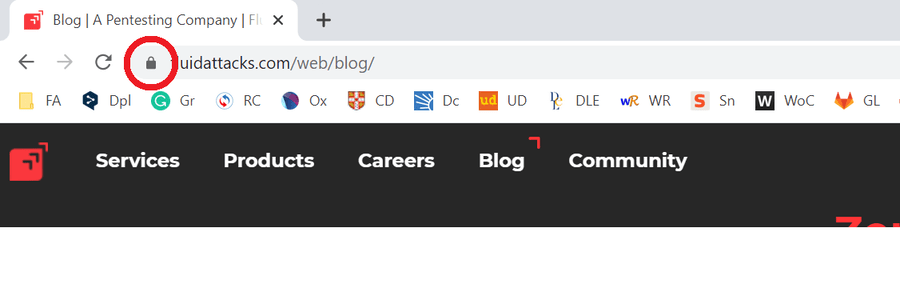
Figure 2. security indicator on Chrome
A system can be well equipped with firewalls, certificates, and
encryption and authentication mechanisms, and phishing can be successful
because of the user’s knowledge, attention, and decision-making. From
here it is then suggested a greater understanding of the human and
situational factors related to the success of phishing attacks.
In addition to technical support, many organizations try to provide
guidance to users and employees. The idea of seeking help when a strange
situation arises should be strengthened. Also, organizations should
establish action plans in the presence of suspected phishing attacks.
In conclusion, and oriented towards a prevention of phishing attacks,
here are just some of the tips you will find in the documents (which we
recommend you review) from
DHS
and
CPNI:
Check if message subjects are generic.
Consider that those messages may show unusual or significant
spelling and grammar errors.Have as a key what type and amount of information is being
requested.Be careful with messages that request urgent action.
If possible, try to contact the sender by another means of
communication to verify the message.
*** This is a Security Bloggers Network syndicated blog from Fluid Attacks RSS Feed authored by Felipe Ruiz. Read the original post at: https://fluidattacks.com/blog/phishing/
