

Telecommunications Network Security: Defending Against Nation State APTs with Unified AI Defense

The global telecommunications ecosystem has entered its most dangerous cyber era.
As 5G, O RAN, cloud workloads, and massive IoT ecosystems expand, telecom networks have become the number one target for nation-state APTs.
Attacks like Salt Typhoon, labeled the worst telecom breach in U.S. history, prove one reality:
Traditional enterprise security tools cannot defend networks operating at telecom scale.
Nation-state actors have infiltrated wiretap systems, maintained multi year persistence, and exfiltrated sensitive subscriber and network data. Telecom operators now face a crisis that threatens national security, economic stability, and global communication infrastructure.
 Full whitepaper here:
https://info.seceon.com/telecommunications-network-security
The Reality: Telecom’s Scale Is Now Its Greatest Vulnerability
Telecommunications networks operate on unmatched scale and complexity, including:
- SS7, Diameter, GTP, SIP, and 5G protocols
- 120 plus petabytes of data processed daily
- Billions of signaling messages every day
- Ultra distributed multi vendor infrastructure
- Millions of IoT and MEC edge devices
Yet most operators still rely on fragmented, legacy tools never designed for this scale.
This results in:
- Protocol blind spots
- High false positives
- Delayed detection
- Lateral movement across generations of technology
- Persistent APT access
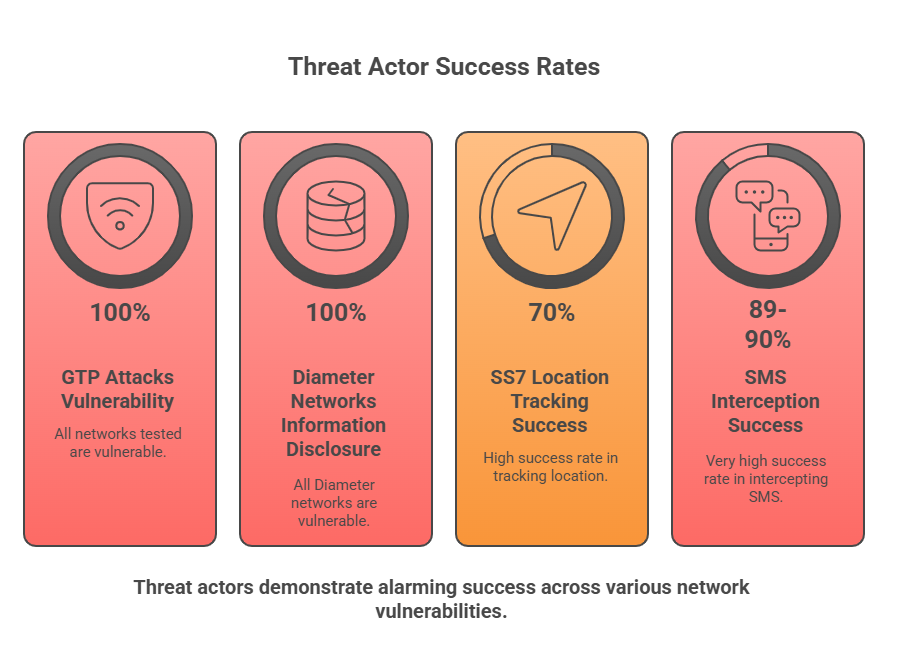
Threat actors consistently succeed:
- 100 percent of networks tested are vulnerable to GTP attacks
- 100 percent of Diameter networks are vulnerable to information disclosure
- 70 percent success rate in SS7 location tracking
- 89 to 90 percent success rate in SMS interception
The Threat: Nation State APT Campaigns Targeting Global Telecom Providers
Telecommunications networks are now the primary battlefield for geopolitical cyber operations.
Salt Typhoon (China)
The most severe telecom breach in U.S. history.
- Persistent access since 2022
- Infiltrated AT&T, Verizon, T Mobile, Lumen
- Compromised wiretap systems
- Exfiltrated call metadata and intercept capabilities
Volt Typhoon (China)
- Compromised 30 percent of exposed Cisco routers
- Pre-positioned within telecom edge infrastructure
Flax Typhoon (China)
- Built botnet operations targeting telecom backbone environments
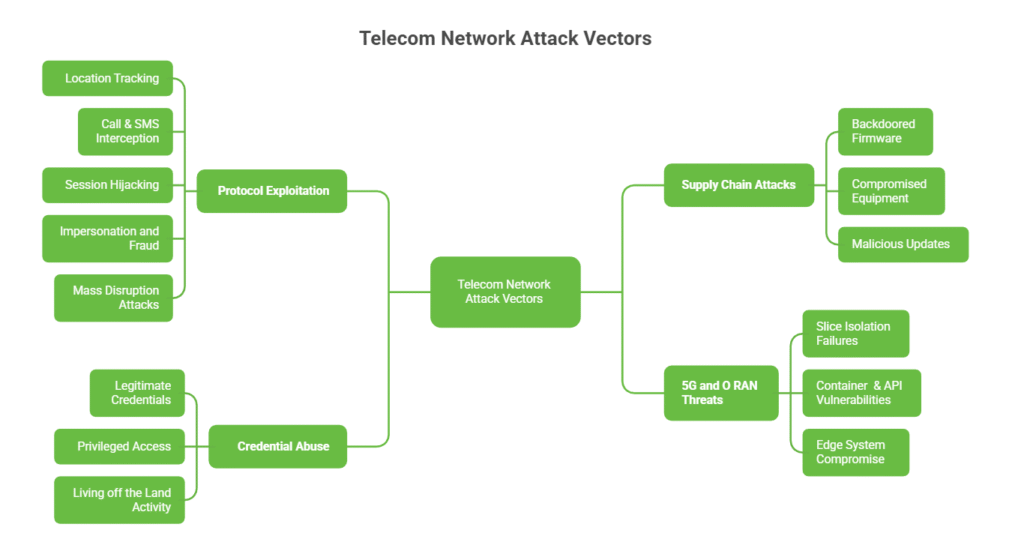
Attack Vectors Exposed
Protocol Exploitation
Telecom signaling protocols enable:
- Location tracking
- Call and SMS interception
- Session hijacking
- Impersonation and fraud
- Mass disruption attacks
Supply Chain Attacks
Including:
- Backdoored firmware
- Compromised vendor equipment
- Malicious updates
Credential Abuse
APTs maintain multi-year persistence via:
- Legitimate credentials
- Privileged access
- Living off the land activity
5G and O RAN Threats
- Slice isolation failures
- Container and API vulnerabilities
- Edge system compromise
Why Traditional Security Tools Fail Telecom Operators
Legacy tools cannot handle:
- Petabyte scale data volume
- Billions of daily protocol messages
- Telecom specific telemetry
- IPv6 massive addressing
- 5G service based architectures
They lack:
- Protocol awareness
- Real time correlation
- Behavioral analytics
- Telecom specific AI models
This results in SOC overload, alert fatigue, and multi year APT persistence.
The Solution: A Unified AI Platform Purpose Built for Telecom
Seceon’s Open Threat Management (OTM) platform is the first AI driven, telecom native security architecture designed for true telecom scale.
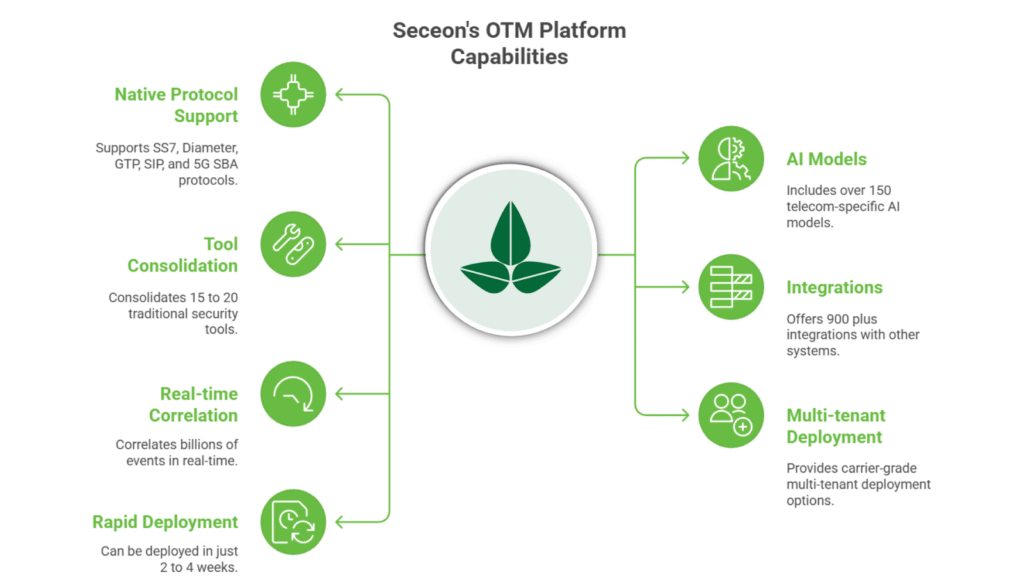
Core Capabilities
- Native support for SS7, Diameter, GTP, SIP, 5G SBA
- 150 plus telecom specific AI models
- Consolidates 15 to 20 traditional tools
- 900 plus integrations
- Real time correlation across billions of events
- Carrier grade multi tenant deployment
- Deployment in 2 to 4 weeks
Operators gain:
- 95 percent protocol attack detection accuracy
- 70 percent faster detection
- Sub 5-second alerting
- Over 50 million dollars are prevented from fraud annually
AI at the Core of Telecom Defense
Seceon’s AI engine enables:
- Dynamic behavioral baselining
- Graph neural network correlation
- Cross protocol lateral movement detection
- Covert channel discovery
- Real time anomaly detection
- Subscriber analytics for 480 plus million users
This shifts operators from reactive to predictive and autonomous defense.
Automated Response and SOC Modernization
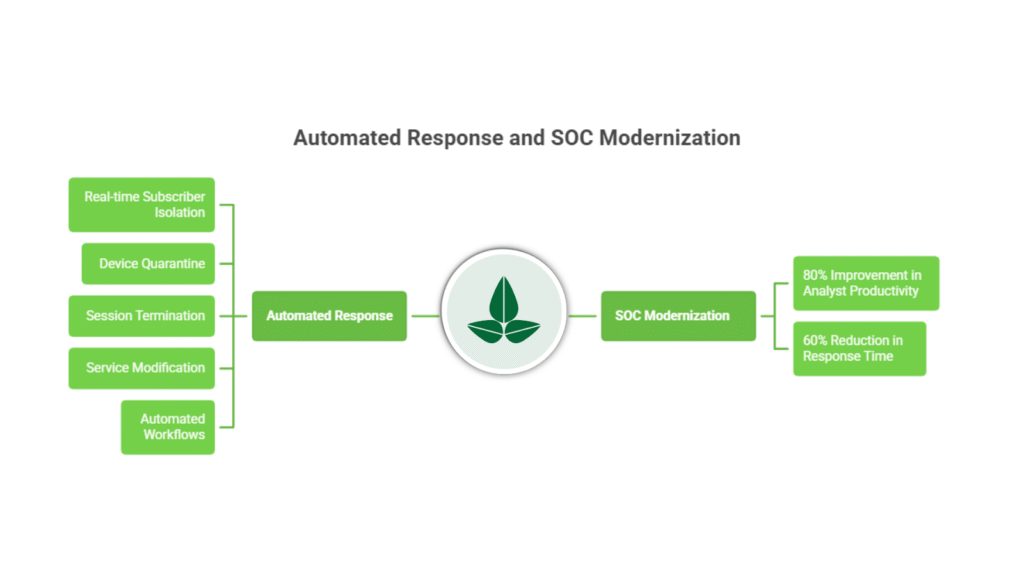
OTM orchestrates:
- Real-time subscriber isolation
- Device quarantine
- Session termination
- Service modification
- Automated workflow
SOC teams report:
- 80 percent improvement in analyst productivity
- 60 percent reduction in response time
Real World Impact and Case Studies
Bharti Airtel: 480 Million Subscribers Protected
- 120 PB processed daily
- 50 billion SS7 messages analyzed per day
- 500 million LTE authentications monitored
- Sub 5 second detection
- 95 percent accuracy
Case Study 1: Global Carrier SOC Transformation
- Consolidated 18 tools
- Increased detection accuracy to 95 percent
- 68 percent operational cost reduction
Case Study 2: Preventing 2.3 Billion Dollars in Losses
- Detected signaling fraud
- 72 percent faster response
Case Study 3: Tier 1 Operator Securing 5G and Cloud
- 70 percent faster detection
- 80 percent SOC efficiency gain
- 50 million plus fraudulent sessions blocked annually
From Fragmented Defense to Telecom Cyber Resilience
Telecom operators are now standardizing on:
- Unified security platforms
- Predictive AI analytics
- Automated compliance
- End to end 5G and O RAN visibility
- Scalable multi tenant SOC operations
This delivers:
- Stronger national infrastructure protection
- Reduced breach risk
- Lower fraud losses
- Higher operational efficiency
- Faster containment
This shift is no longer optional.
It is a strategic necessity for global telecom resilience.
Conclusion: Telecom Cybersecurity Has Entered a Critical New Phase
Telecom networks form the digital nervous system of modern civilization.
Nation state APTs, protocol level attacks, and multi vector intrusions demand a telecom native, AI powered security model.
Unified platforms like Seceon OTM enable operators to:
- Detect advanced attacks in real time
- Protect billions of signaling events
- Automate response at carrier scale
- Prevent multi billion dollar fraud losses
- Ensure secure 5G, O RAN, and cloud transformation
Telecom operators now stand at a defining crossroads.
The future of global connectivity depends on adopting unified AI driven cybersecurity.

The post Telecommunications Network Security: Defending Against Nation State APTs with Unified AI Defense appeared first on Seceon Inc.
*** This is a Security Bloggers Network syndicated blog from Seceon Inc authored by Aditya Kumar. Read the original post at: https://seceon.com/telecommunications-network-security-defending-against-nation-state-apts-with-unified-ai-defense/
