
Home » Security Bloggers Network » ISO 27001 Tools & Services: Empower Your Business with Stronger Information Security

ISO 27001 Tools & Services: Empower Your Business with Stronger Information Security

In today’s rapidly evolving digital ecosystem, organizations are entrusted with an unprecedented volume of data. As cyber threats become more sophisticated and compliance demands grow increasingly stringent, establishing a strong information security posture has never been more critical. ISO/IEC 27001, an internationally recognized standard, serves as the foundation for building a comprehensive Information Security Management System (ISMS). A notable example is a financial services company that faced ransomware attacks, leading to a 40% decrease in operational efficiency. After implementing ISO 27001, they enhanced their security protocols, resulting in an improved incident response time of 60%, which directly translated into a 25% increase in customer trust and retention. Yet, achieving ISO 27001 certification is more than a regulatory checkbox — it is a strategic imperative that positions businesses for long-term resilience.
Understanding ISO 27001 and its significance
ISO 27001 is not just a framework; it is a philosophy of risk-based thinking and continuous improvement. The standard defines the requirements for establishing, implementing, maintaining, and improving an ISMS. It ensures that sensitive data — whether related to clients, employees, or intellectual property — is safeguarded through rigorous controls and structured governance. For example, a mid-sized financial firm faced significant data breaches due to inadequate security measures. After implementing ISO 27001, they established a comprehensive ISMS, which led to a 75% reduction in security incidents within the first year and an increase in client trust, reflected in a 30% rise in customer satisfaction scores.
For organizations, compliance with ISO 27001 demonstrates a commitment to security and establishes trust with customers, partners, and regulators. It helps businesses identify and address vulnerabilities, improve operational efficiency, and maintain business continuity in the face of disruptions. Consider an e-commerce company that struggled with frequent downtime due to security threats. By adopting the ISO 27001 framework, they streamlined their data protection processes, resulting in a 50% decrease in downtime and a subsequent 20% boost in sales, showcasing how adherence to the standard not only protects assets but can also enhance overall performance.
Essential tools and services for ISO 27001 implementation
Achieving ISO 27001 compliance requires a comprehensive suite of tools and services that align with the standard’s core principles. These resources help organizations streamline their compliance journey while enhancing their overall security maturity. For instance, a financial services company faced challenges in managing sensitive client data. By implementing a robust ISO 27001 compliance suite, they reduced data breaches by 40% in just one year, showcasing significant improvements in their security posture.
- Risk assessment and treatment tools
Risk assessment is the cornerstone of ISO 27001. Specialized tools help identify information security risks, evaluate their potential impact, and develop appropriate mitigation strategies. These tools automate risk scoring, provide detailed risk registers, and enable teams to prioritize actions effectively. For example, a healthcare organization utilized a risk assessment tool that allowed them to pinpoint vulnerabilities in their patient data systems. By addressing these risks proactively, they achieved a 50% reduction in incidents related to data leaks within 18 months. - Policy and procedure templates
Documented policies and procedures are essential for demonstrating ISO 27001 compliance. Organizations can leverage pre-built templates that cover areas such as data protection, access control, incident response, and business continuity. These templates ensure consistency, reduce effort, and accelerate the documentation process. A retail company facing high turnover rates found that by standardizing their security policies with templates, they reduced onboarding time for new employees by 30% while increasing overall compliance rates within the workforce. - Security awareness and training programs
Employee awareness is one of the strongest lines of defense against cyber threats. Organizations must implement comprehensive training programs that educate staff about phishing attacks, password hygiene, data classification, and secure handling of sensitive information. For instance, a mid-sized tech company implemented a gamified e-learning module that resulted in a 40% reduction in successful phishing attempts within the first six months. Regular refreshers help cultivate a security-first culture, reinforcing knowledge and preparedness among employees. - Audit and compliance management platforms
To maintain ISO 27001 certification, organizations must undergo regular internal and external audits. For example, a financial institution adopted an audit management platform that automated compliance tracking and documented evidence, which led to a 30% decrease in audit preparation time. Platforms designed for audit management can track compliance status, document evidence, manage corrective actions, and generate audit-ready reports. These systems provide real-time visibility into compliance gaps and enable faster remediation. - Consulting and advisory services
Partnering with experienced consultants can make a significant difference, especially for organizations new to ISO 27001. These experts offer guidance on gap analysis, control implementation, and readiness assessments. For instance, a small enterprise faced challenges in aligning its security posture with ISO requirements and enlisted a consulting firm. As a result, they achieved certification within eight months, improving their market competitiveness. They bring real-world insights and industry benchmarks that help organizations avoid common pitfalls. - Vendor risk management tools
Third-party vendors often introduce risk into the organization’s ecosystem. Tools that support vendor assessments and due diligence help organizations evaluate the security posture of suppliers and ensure compliance with ISO 27001 requirements. For instance, a financial services firm implemented a new vendor risk management tool that successfully identified compliance gaps in 15% of their third-party relationships. By addressing these gaps, they reduced their risk exposure and achieved a 30% decrease in vendor-related incidents over the next year. - Document control and versioning systems
Version control of ISMS documents is critical for audit and operational clarity. Document management tools ensure that policies, risk assessments, and logs are maintained in a secure, centralized repository with robust access controls and change history tracking. A leading manufacturing company adopted an automated document control system and reported a 40% reduction in document retrieval times during audits, leading to faster compliance checks and enhanced operational efficiency.
Industry insights and market trends
The demand for ISO 27001 certification has been on the rise, driven by increasing concerns over data breaches and stringent regulatory requirements. According to a report by Business Research Insights, the ISO 27001 certification market is experiencing significant growth, with organizations across various sectors seeking certification to enhance their information security frameworks. The report highlights a trend towards the adoption of specialized software solutions that automate the certification process, making risk assessment and ISMS implementation more efficient.
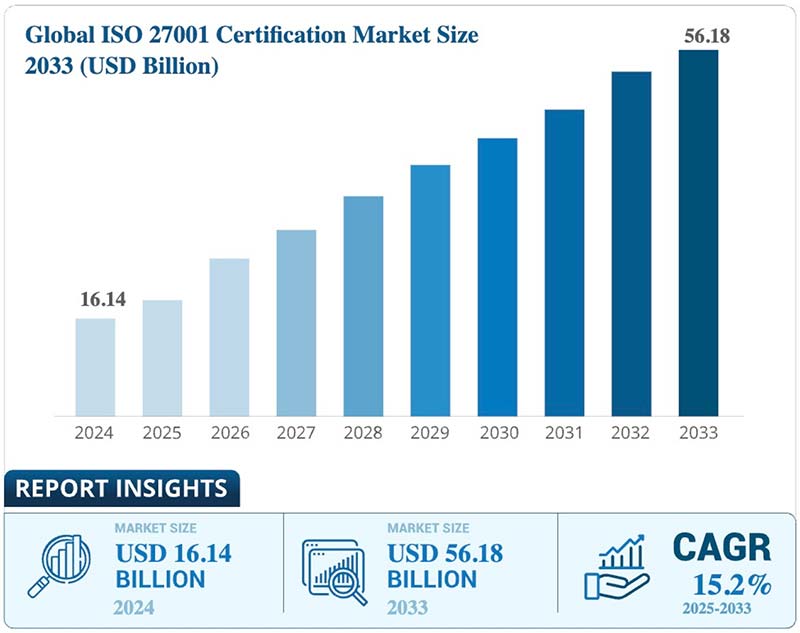
Source: Business Research Insights
Furthermore, the COVID-19 pandemic has underscored the importance of robust information security practices. As organizations rapidly transitioned to remote work, the need for effective ISMS became more apparent, leading to a renewed focus on achieving ISO 27001 certification.
Simultaneously, the shift toward hybrid and remote work environments has introduced new security risks, prompting companies to revisit their ISMS strategies. Tools that facilitate remote audit readiness, cloud-native control implementation, and secure collaboration are gaining popularity. One technology firm reported that by utilizing cloud-based security solutions as part of their ISO 27001 compliance strategy, they were able to enable remote access for over 200 employees without compromising security, thus maintaining business continuity during challenging times.
Furthermore, industries like healthcare, finance, and technology are integrating ISO 27001 into their procurement requirements, compelling vendors to obtain certification as a prerequisite for doing business. For instance, a healthcare provider faced significant challenges in data management and compliance with patient privacy regulations. By adopting ISO 27001, they not only streamlined their data handling processes but also reported a 30% reduction in security incidents within the first year. This cascading effect is expanding ISO 27001 adoption globally.
Future outlook
The future of ISO 27001 implementation is being shaped by automation, artificial intelligence (AI), and continuous compliance models. Organizations, such as a leading fintech company, have increasingly embraced automation to handle repetitive tasks such as evidence collection, control monitoring, and audit preparation. This implementation resulted in a 50% reduction in the time spent on audits, allowing their compliance teams to focus more on strategic risk management. This reduces human error, accelerates compliance cycles, and enables teams to focus on strategic risk management.
AI and machine learning are enhancing ISMS tools with predictive analytics, anomaly detection, and intelligent reporting. A successful case was seen with a technology firm that utilized AI-driven tools to monitor network traffic. This proactive approach allowed them to identify potential threats before they could impact operations, resulting in a 40% decrease in security breaches. These capabilities allow organizations to proactively identify emerging threats and adapt their controls accordingly.
Looking ahead, ISO 27001 will continue to evolve in response to emerging technologies and regulatory shifts. Integrating privacy standards such as ISO 27701 and aligning with global data protection laws will become essential. A retail company that adopted ISO 27001 alongside ISO 27701 experienced not only compliance with GDPR but also a 25% increase in customer trust and satisfaction scores. Moreover, as more organizations adopt DevSecOps and agile development models, ISMS tools must adapt to support continuous delivery pipelines without compromising security.
Key take-aways
Building and maintaining a robust ISMS through ISO 27001 is no longer optional; it is a necessity in a world where cyber threats can disrupt operations and damage reputations. For instance, a mid-sized financial services firm faced a massive data breach that resulted in a loss of customer trust and over $1 million in remediation costs. After achieving ISO 27001 certification, they implemented a security-first culture and saw a 40% reduction in security incidents within the first year. By leveraging a comprehensive suite of tools and services, organizations can not only achieve certification but also create a security-first culture that drives long-term success.
ISO 27001 is more than a compliance milestone. It is a strategic enabler that aligns security with business objectives, builds stakeholder trust, and positions organizations to thrive in an increasingly digital and interconnected world. For example, a technology startup, prior to certification, struggled with compliance during client audits, losing potential contracts. Post-certification, they reported a 30% increase in contract acquisitions due to improved client confidence in their security practices. As the landscape continues to evolve, staying agile, informed, and proactive will be key to securing the future.
The post ISO 27001 Tools & Services: Empower Your Business with Stronger Information Security first appeared on TrustCloud.
*** This is a Security Bloggers Network syndicated blog from TrustCloud authored by Akshay V. Read the original post at: https://www.trustcloud.ai/grc/iso-27001-tools-services-empower-your-business-with-stronger-information-security/
